
Site protection / Greater Seattle
Site protection & dust containment in Greater Seattle
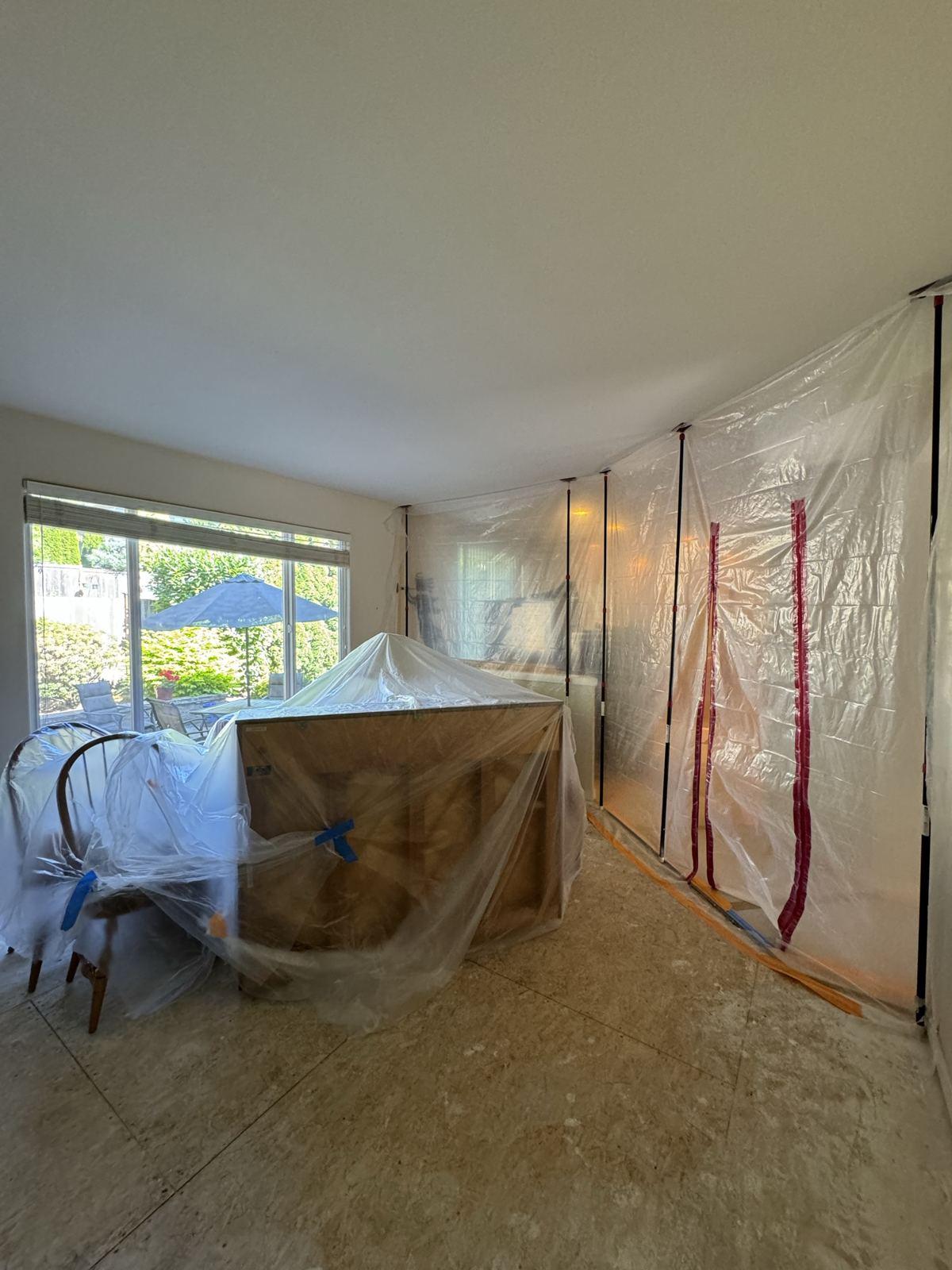
We set up zip-wall plastic to zone off the work area and keep dust and debris out of the rest of your home.
Residential / Commercial / Site protection
Get a free estimateThe short answer
What is site protection?
Site protection is the setup of protective plastic barriers on zip-wall poles to zone off a work area, so dust and debris from demolition or remodeling cannot spread through the rest of the home. BRD Demolition installs site protection for homeowners, remodelers, and general contractors across King and Snohomish counties, either as a standalone service or as the first step of a demolition job. Floors, stairs, and finishes on the route out of the house are covered at the same time.
- What it is
- Plastic zip-wall containment that seals the work area off from the rest of the home
- Also protected
- Floors, stairs, cabinets, fixtures, and HVAC returns
- Materials
- Heavy floor board, taped seams, 6 mil poly sheeting, spring poles, zipper doors
- Booked as
- Standalone setup or included with BRD demolition work
- Who it is for
- Homeowners, remodelers, and general contractors
- Service area
- Greater Seattle, including King and Snohomish counties
- Estimate
- Free, written after an on-site walkthrough
Before we start / 01
Protectingyour homebeforeworkstarts.
Most remodel damage does not come from the demolition itself. It comes from the path between the work area and the driveway, from boots, carts, debris bins, and dust that travels on the air. We plan that path first, then we seal off the rooms that are staying finished.
See what is includedCover / Contain / Then demo
If this sounds familiar
When youneed siteprotection.
If any of these describe your project, protection should go in before a single tool comes out.
In our experience, the remodels that go sideways early are the ones where protection was treated as optional. A scratch in site-finished oak or drywall dust in the return air costs far more to fix than it does to prevent.
- You are living in the home during the remodel.
- Hardwood, tile, or carpet outside the work area is staying.
- Debris has to travel through finished rooms or down stairs to get out.
- Cabinets, countertops, or built-ins near the work are being kept.
- Someone in the household is sensitive to dust.
- You are a contractor who wants the site handed over ready for your crew.
What is included / 02
What’sincluded.
We install a full protection setup, in the order that keeps dust and foot traffic under control.
Floor protection.
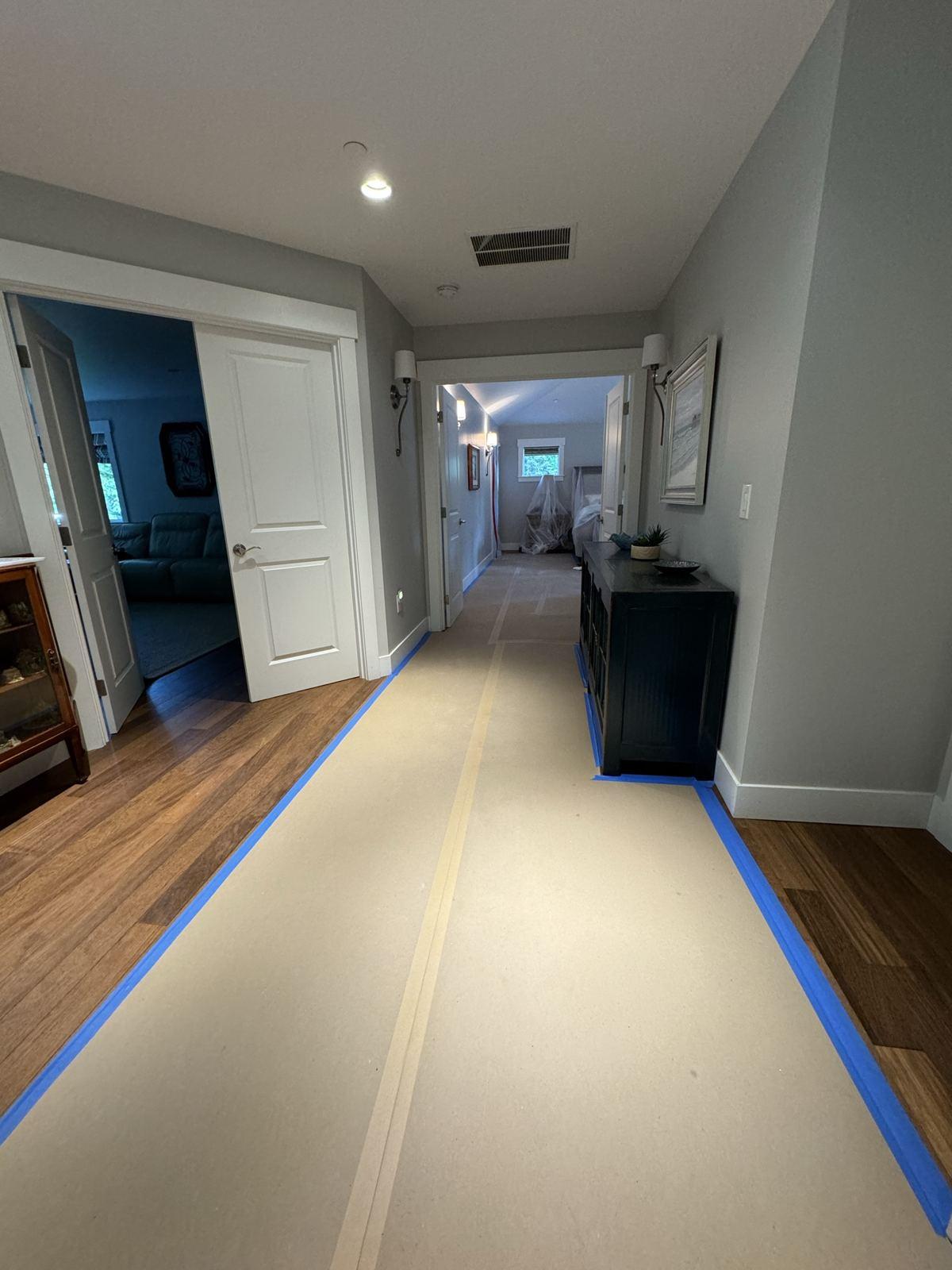
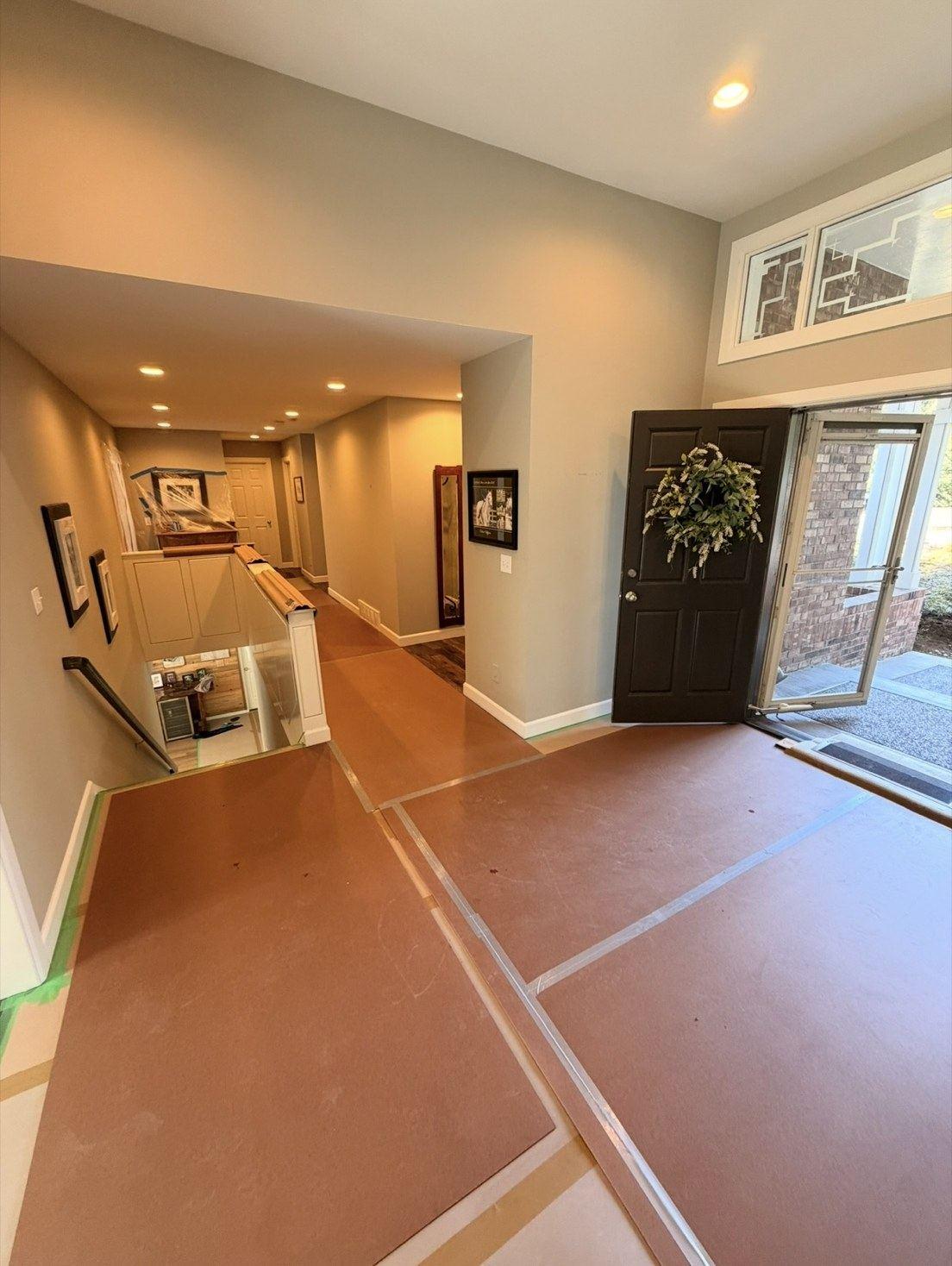
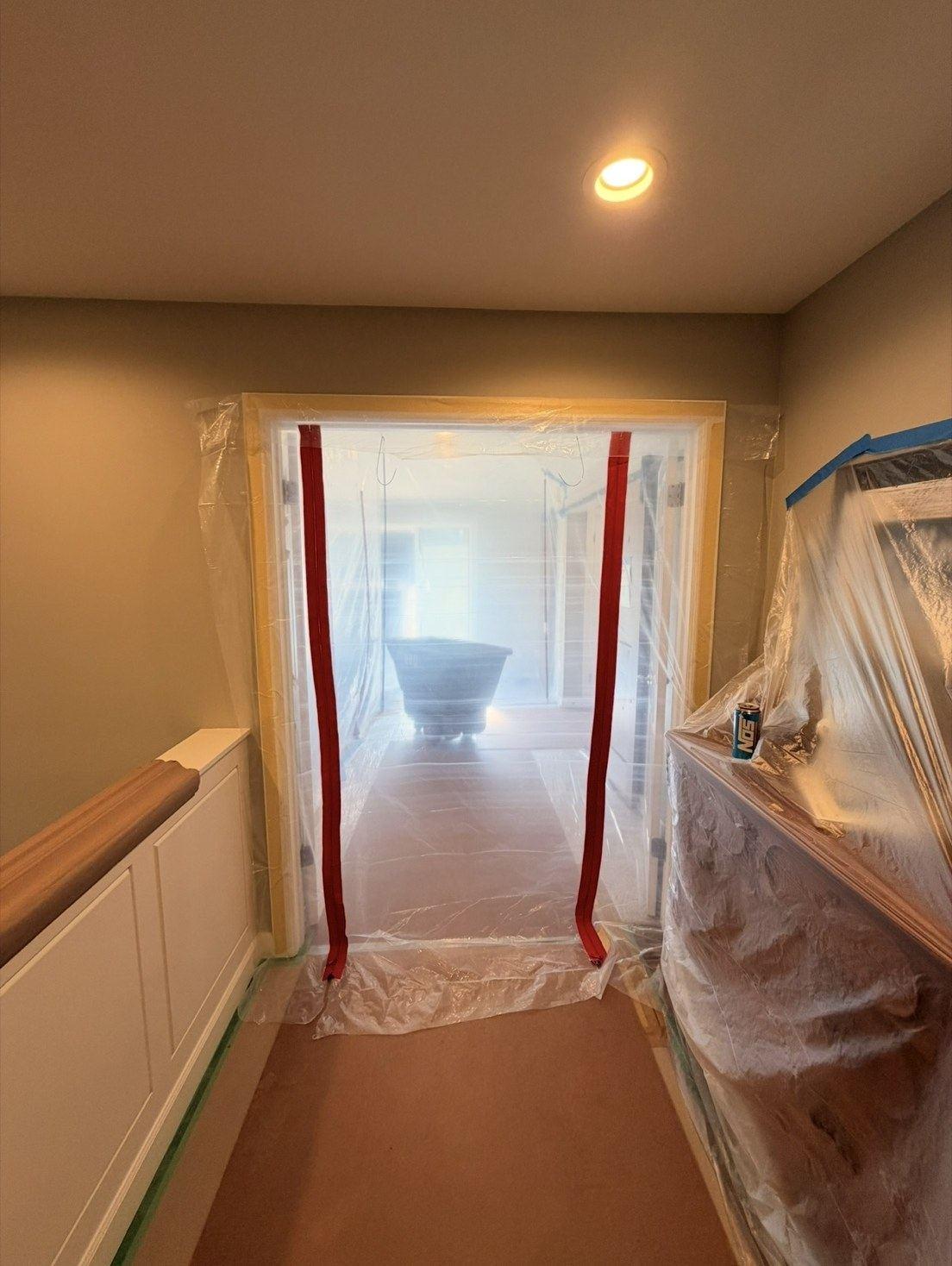
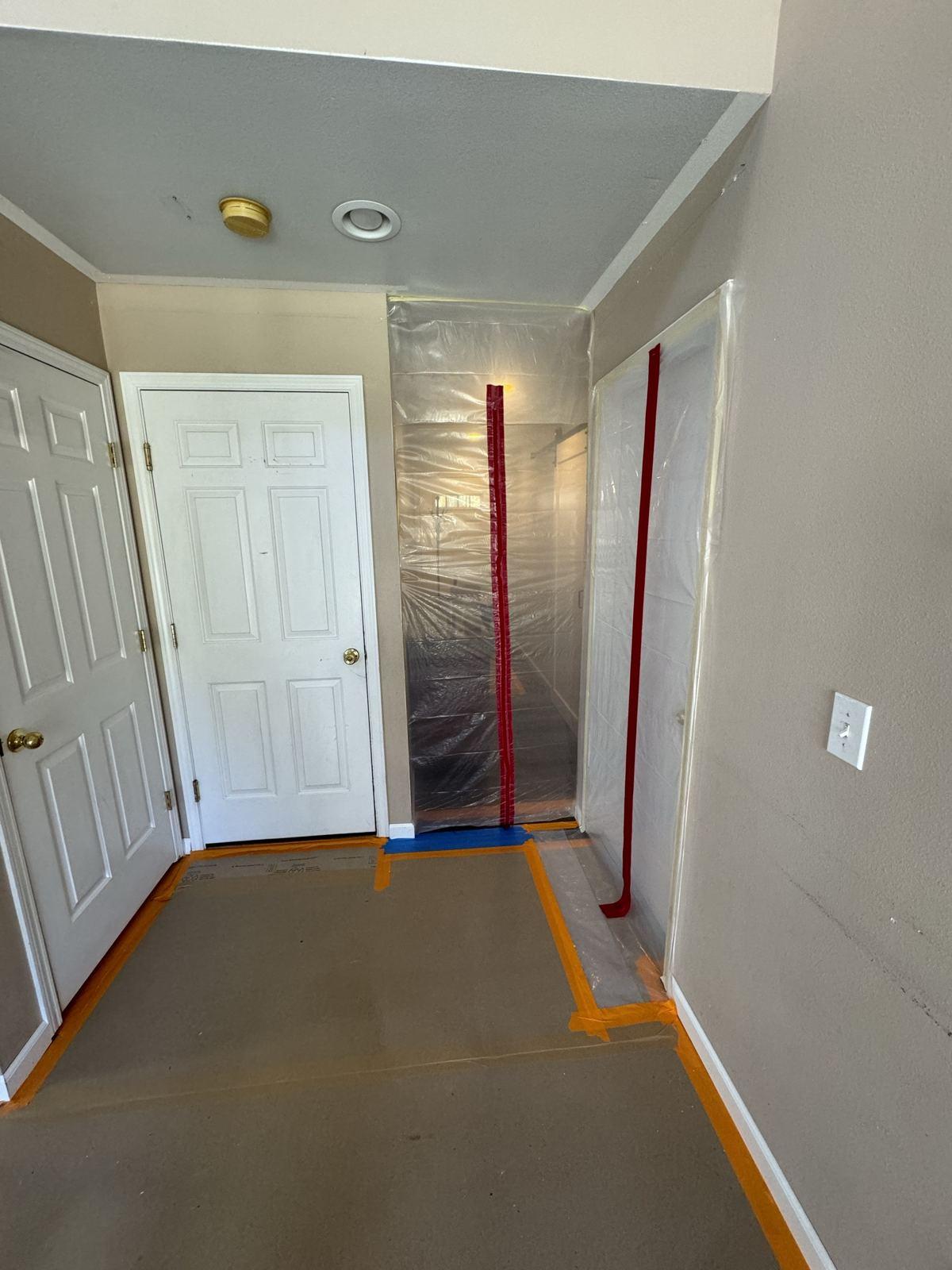
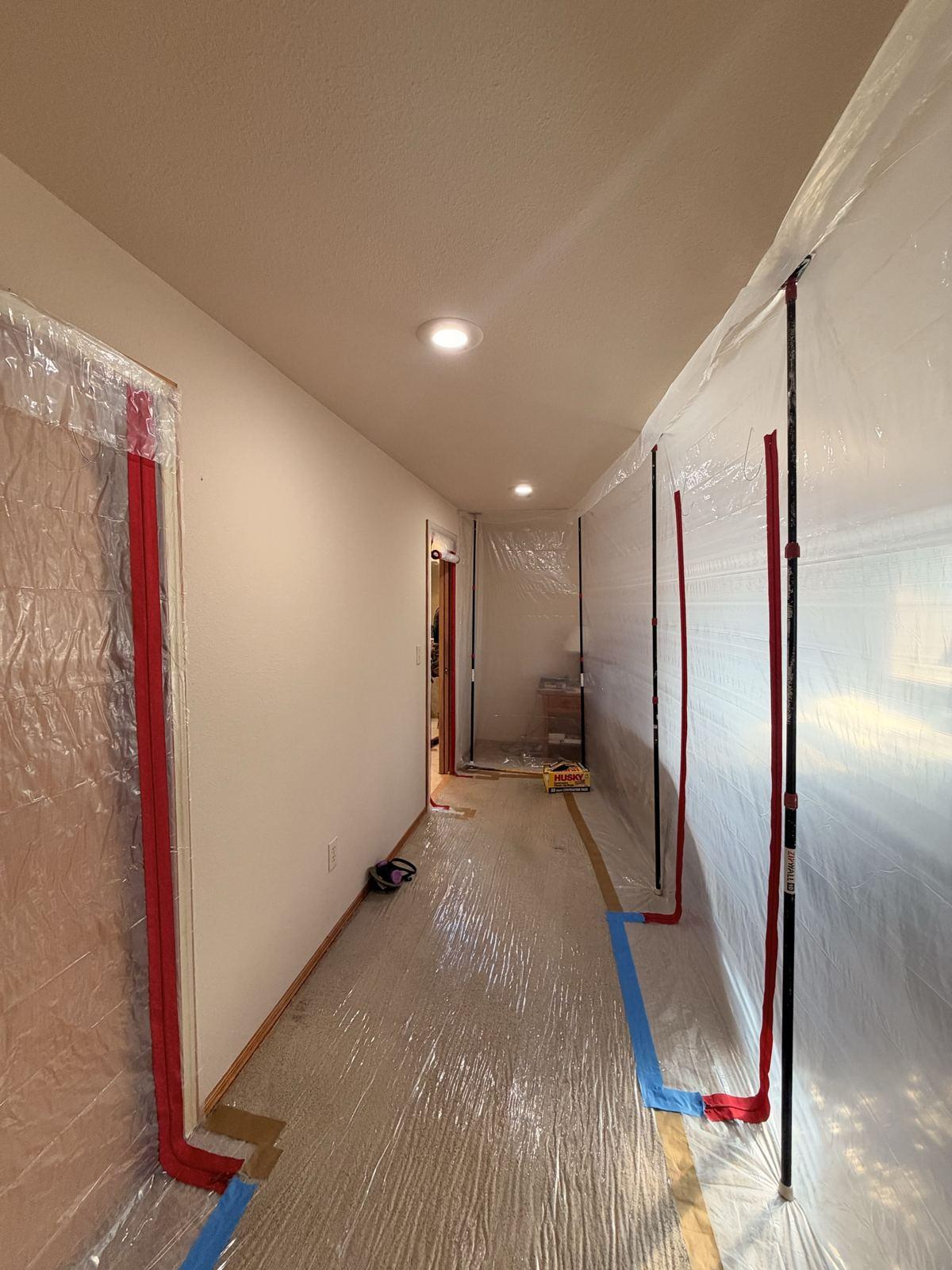
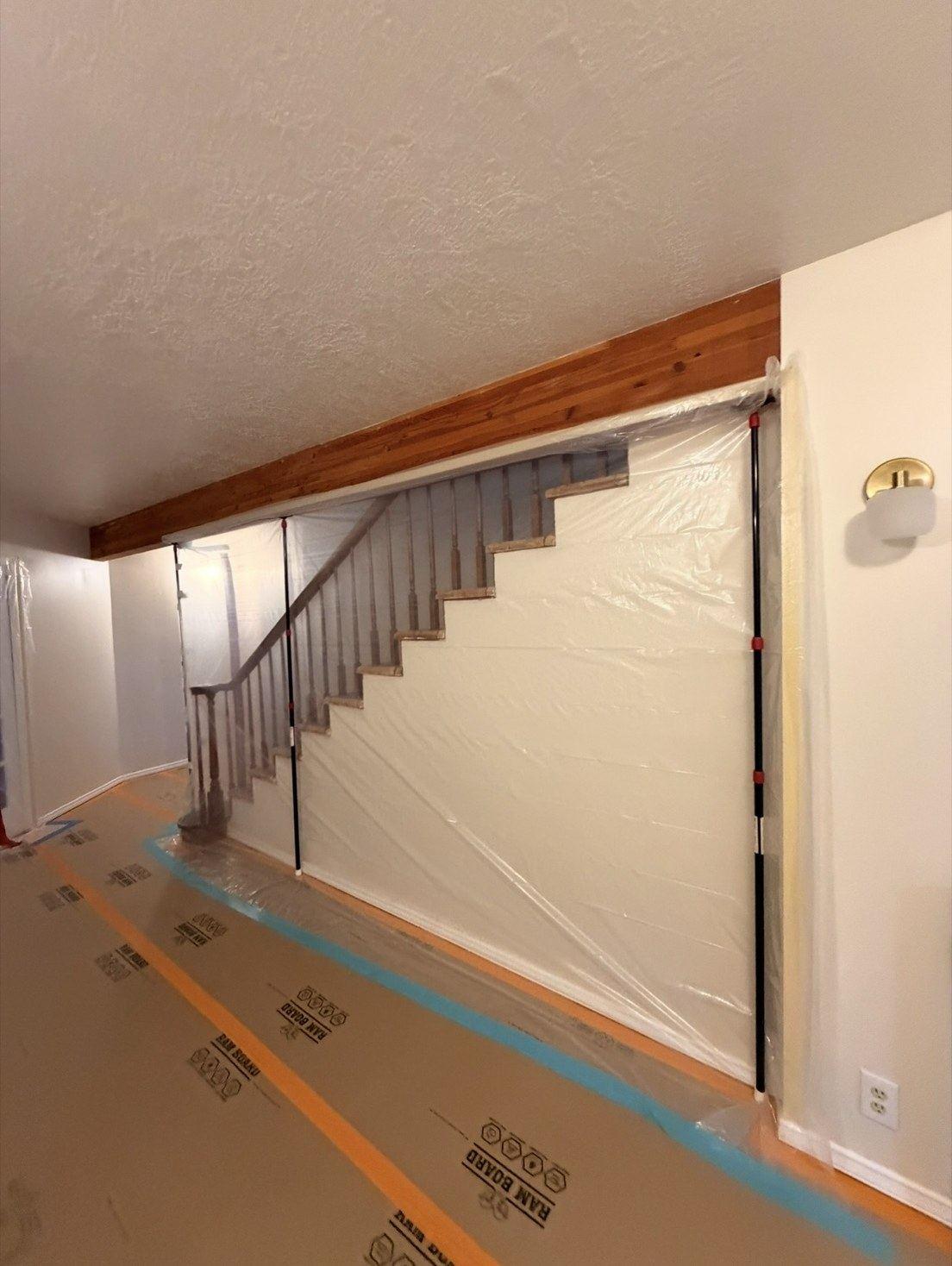
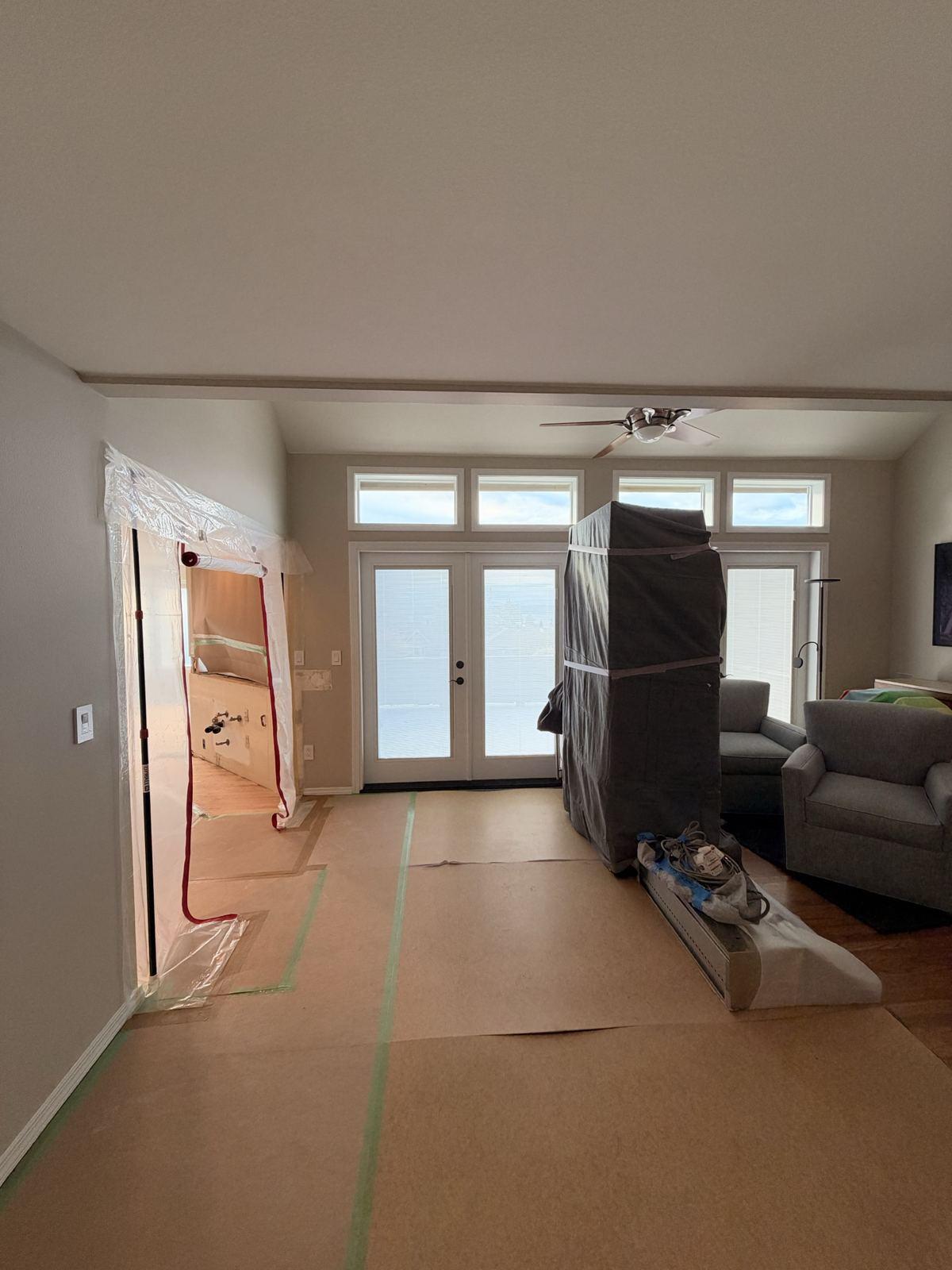
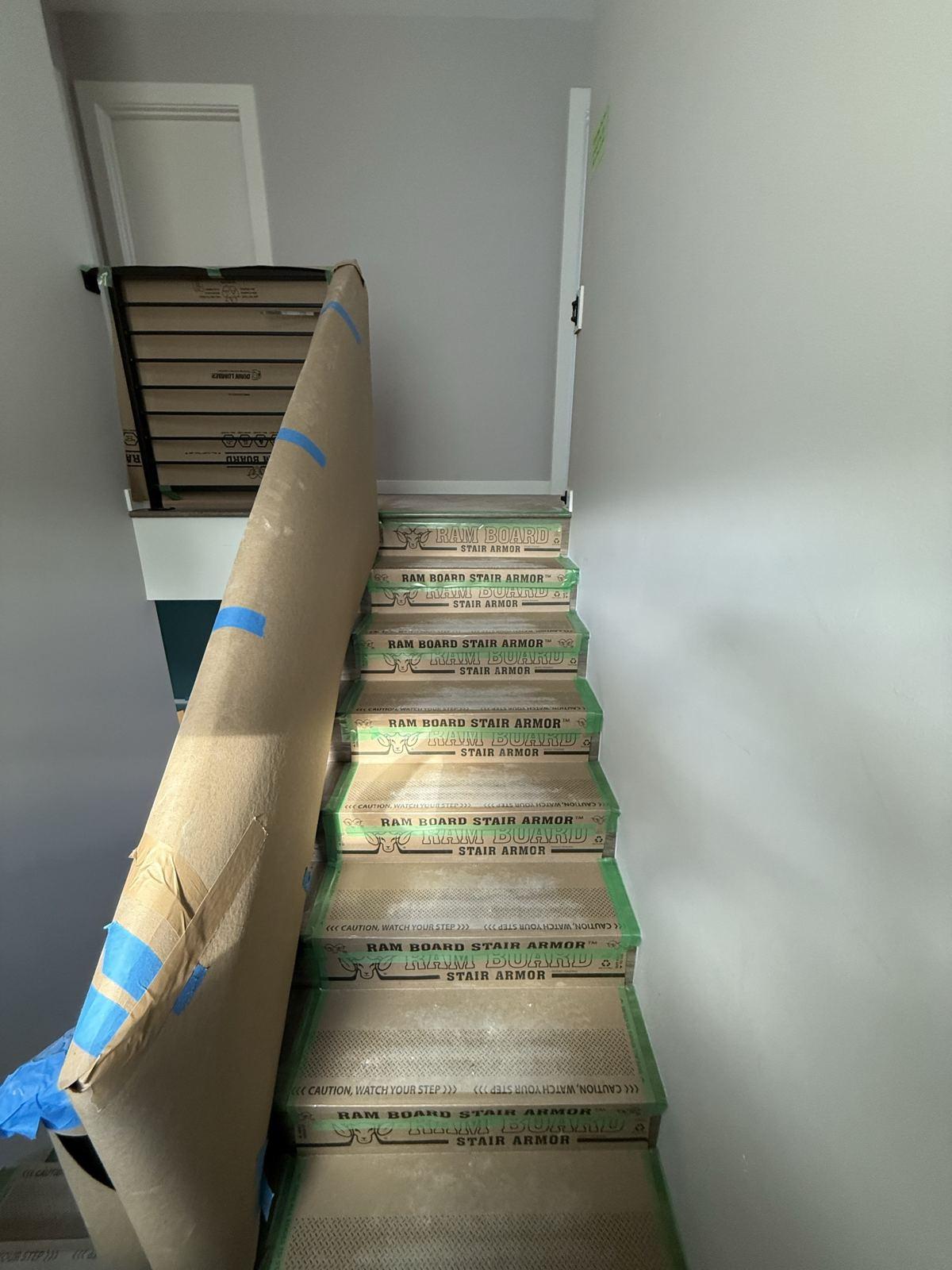
We lay heavy-duty floor board over your hardwood, tile, and finished stairs along every traffic path, and tape the seams and edges so grit cannot work its way underneath. We cover each stair tread individually so the footing stays safe.
Dust containment.
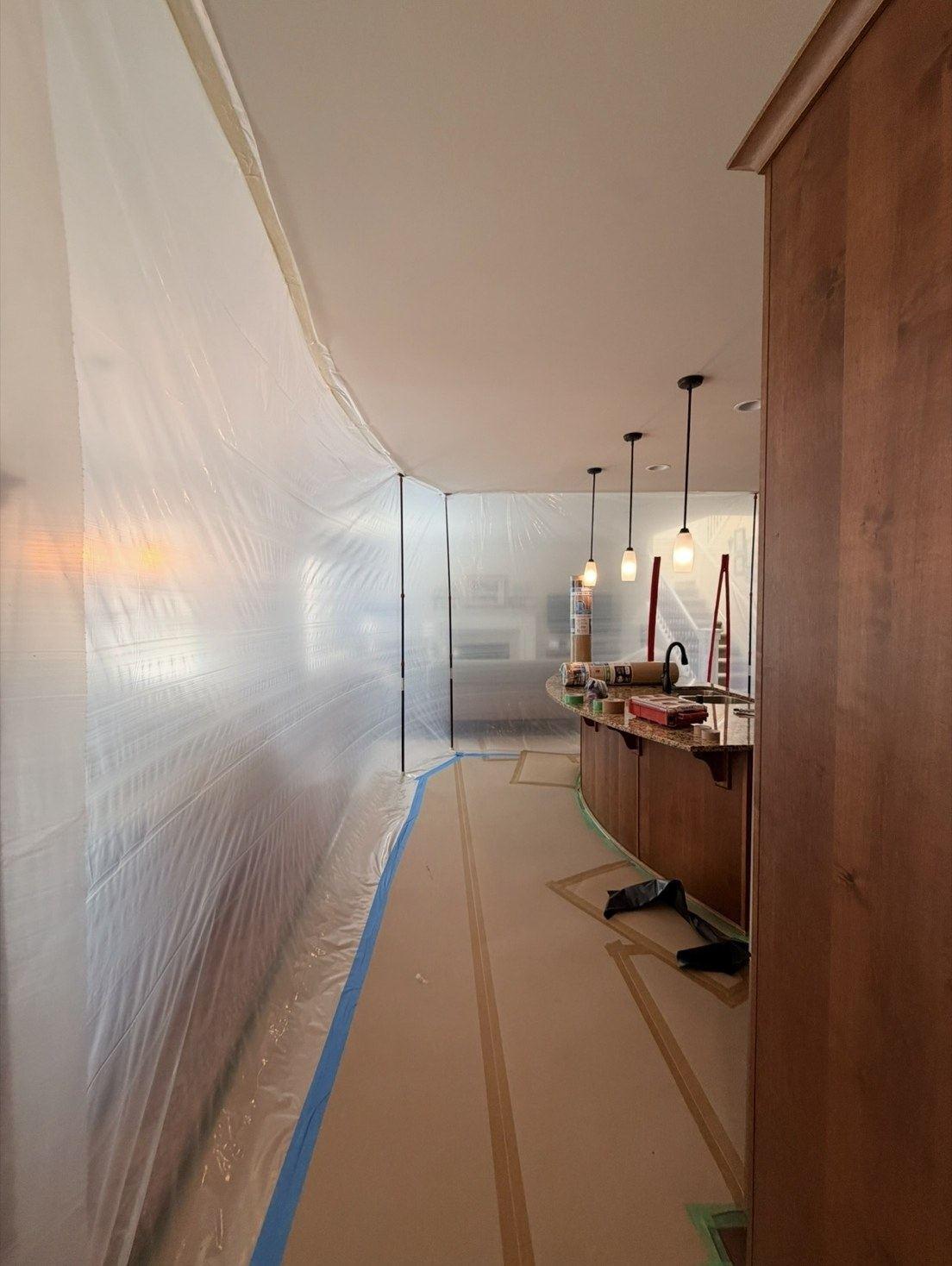
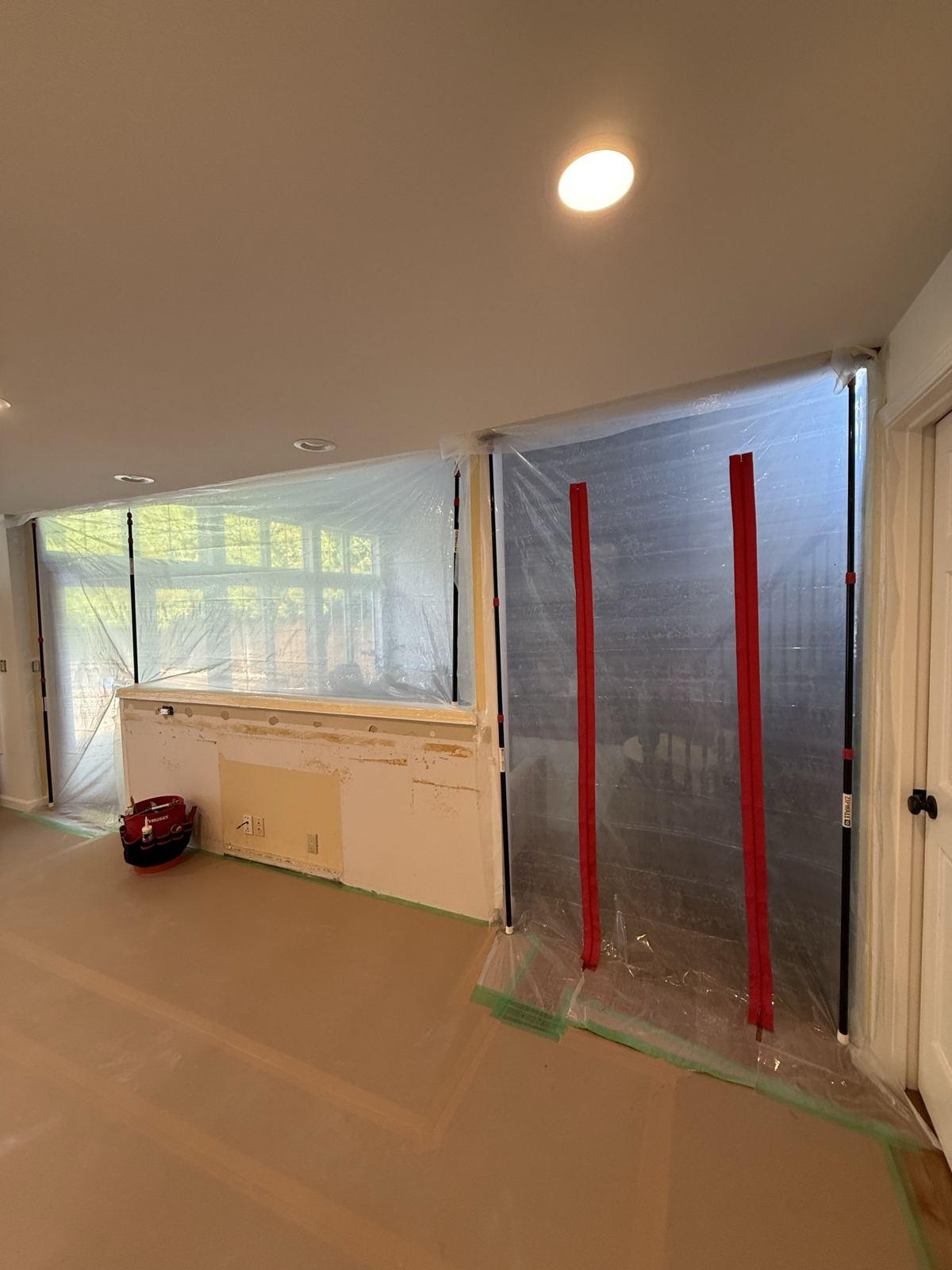
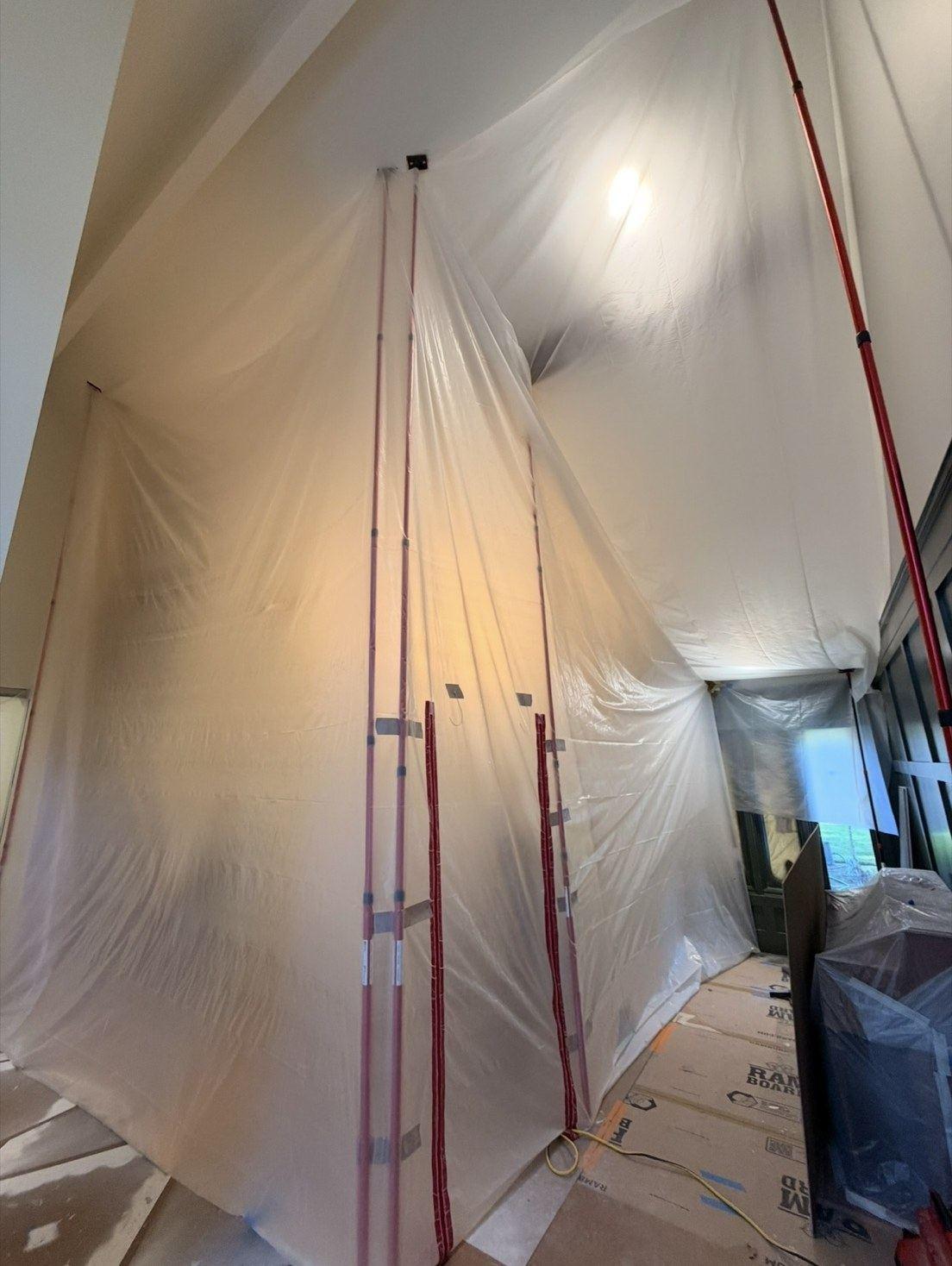
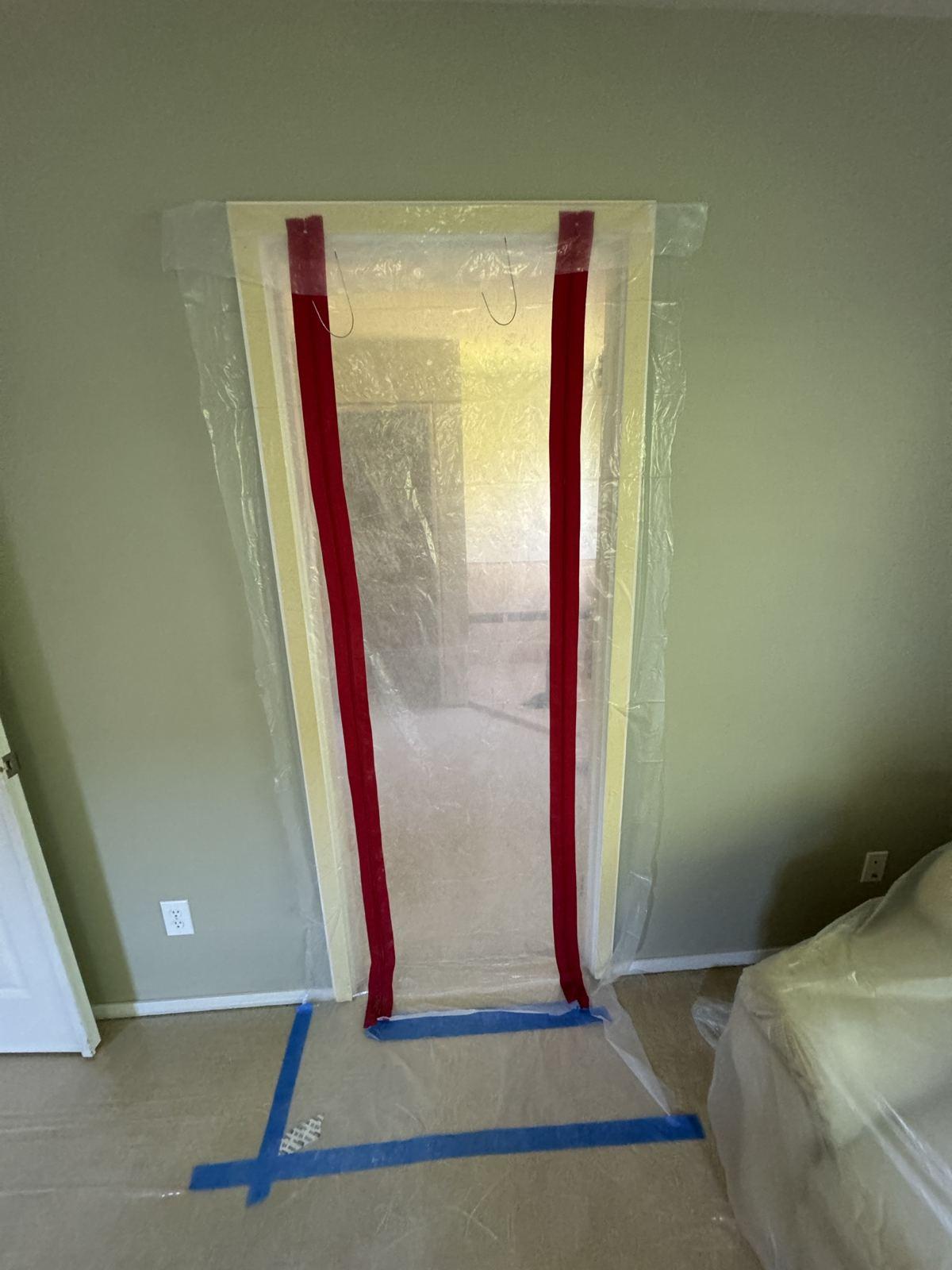
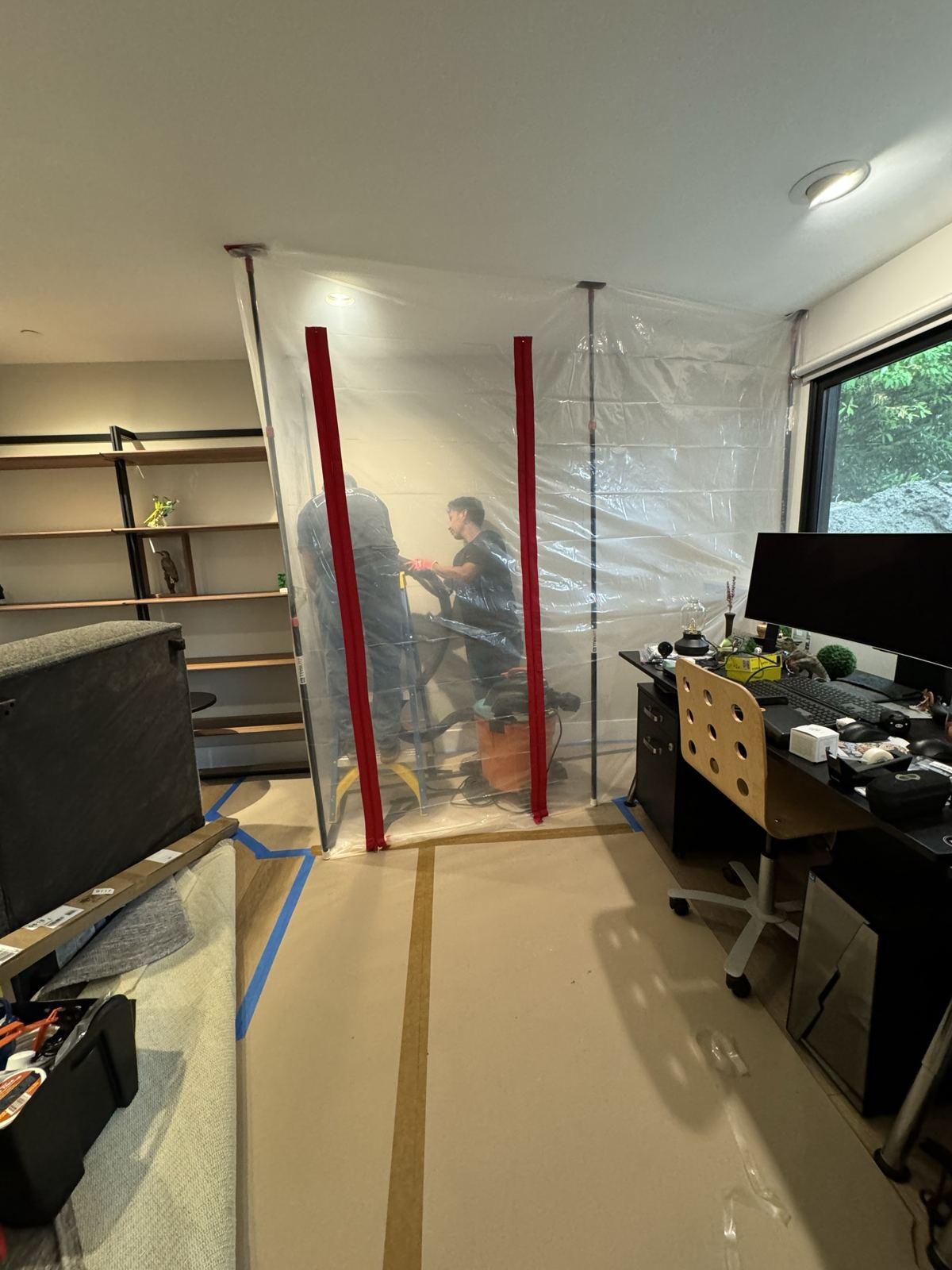
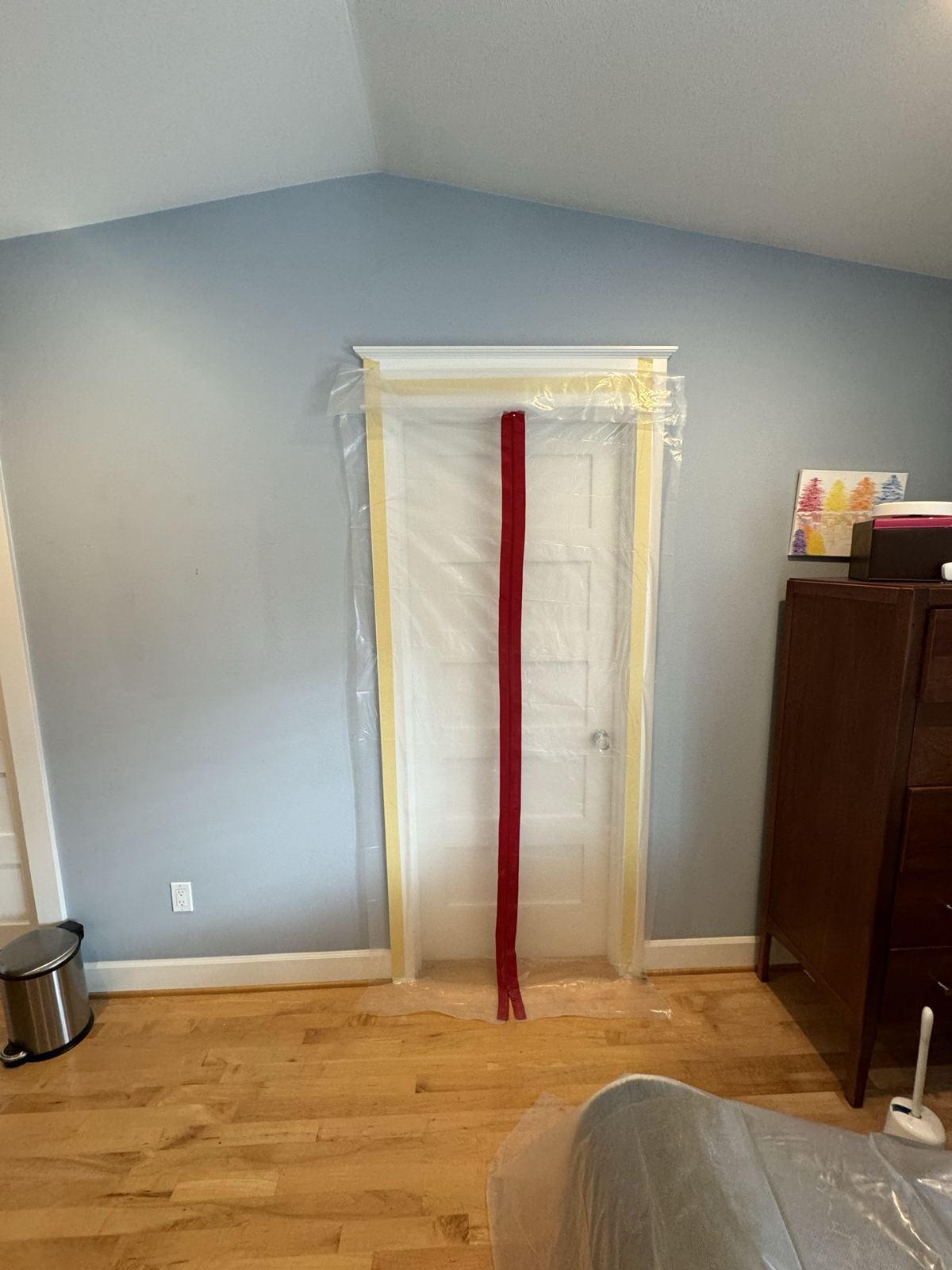
We put up floor-to-ceiling plastic sheeting held with spring poles and sealed at the edges, with zipper doors for access. Doorways, pass-throughs, and open stairwells get closed off so the work area becomes its own sealed room.
Surface and fixture wrapping.
We wrap or pad the cabinets, countertops, islands, railings, and fixtures that are staying. We also cover the supply and return vents inside the work zone so dust does not travel through your ductwork.
Air management.
Where the job calls for it, we run an air scrubber with HEPA filtration inside the containment and duct it outside. That keeps air moving into the work zone and not out of it.
We confirm the layout with you during the walkthrough. Our protection can stay in place for the trades that follow, or we can come back and remove it when the dusty phases are finished.
How we work / 03
What youcan expect.
Site protection can be the whole job.
Not every project needs demolition from us. Remodelers and homeowners across the Greater Seattle area bring us in just to protect the site before floor refinishing, drywall repair, painting, or work by another crew.
When we are also doing the demolition, protection is the first half-day of the job, not an add-on. The same crew that installs the barriers works inside them, so nothing gets cut open or peeled back for convenience.
Our process
How itworks.
The order matters, because each step protects the one before it. Here is how we do it.
Walk the path.
We trace the route from the work area to the exit, note every finished surface along it, and mark what stays and what goes.
Cover floors and stairs.
We sweep the floors first so grit is not trapped under the board. Then we lay, overlap, and tape the protection, starting at the exit and working inward.
Build containment.
We put the plastic walls up on spring poles, seal the edges, and place the zipper doors where our crew actually needs to pass.
Wrap and seal.
We wrap the cabinets, counters, and fixtures that are staying, cover the vents in the work zone, and set up air filtration if it is needed.
Check and hand over.
We walk it with you or your contractor, adjust anything that will get in the way of the work, and confirm who removes it and when.
Your options
Zip wallor tapedplastic?
Not all dust barriers do the same job. Here is the difference.
Plastic taped across a doorway is better than nothing, but the tape lets go of paint and trim once dust loads it up, and a taped sheet has to be peeled back every time someone walks through. A zip-wall system uses spring-loaded poles to press the plastic against the ceiling and floor, with a zipper door for access, so the seal holds up through a full day of foot traffic and bin runs.
The other decision is negative air. For a short, clean job, a sealed barrier is enough. For plaster, tile, or a long project, we use an air scrubber exhausting outside to keep air flowing into the work zone, so dust does not get pushed out when the door opens.
- Short job, drywall only: sealed zip wall and covered vents
- Plaster, tile, or concrete dust: zip wall plus air scrubber
- Whole floor under construction: contain the stairwell, not each room
- Occupied home with kids or pets: zipper doors that close fully, every time
Containment / 01
Keepingdust outof the restof yourhome.
Fine drywall and plaster dust stays in the air for hours and follows the air movement through a house. A sealed plastic wall with a zipper door, combined with covered returns, is what keeps a kitchen demo from ending up in your upstairs bedrooms.
Finishes / 02
Protectingyourfloors.
A single screw under a boot will gouge prefinished hardwood. We put taped, overlapping floor board on every traffic path, including your stairs and entries, so that risk is off the table for the length of the project.
In King and Snohomish counties
Siteprotectionin GreaterSeattle.
Most of the remodels we work on happen in homes people are living in.
Many homes in King and Snohomish counties are heated with forced air, and a return grille inside the work zone will pull fine dust into the ductwork and send it to every room. Covering the returns and supplies in the contained area is part of every setup we do.
Our long wet season also means your windows stay shut for much of the year, so dust that escapes has nowhere to go. And in homes built before 1980, an asbestos survey is required before finishes are disturbed, because containment is not a substitute for abatement.
Why it matters
What itcosts toskip it.
Protection is cheap compared to what it prevents.
Without containment, demolition dust settles inside your cabinets, closets, electronics, and HVAC system, and it keeps showing up for weeks. Duct cleaning and a full-house deep clean become part of your remodel budget.
Without floor protection, the usual results are scratched hardwood, cracked tile at thresholds, and stained carpet on the stairs. Spot repairs on site-finished floors rarely blend, so a small gouge can turn into refinishing an entire room.
Pricing guidance
What siteprotectioncosts.
We quote site protection for each project after a walkthrough, and the estimate is free.
We do not publish flat rates for site protection, because the material and labor depend on your layout. Here is what affects your price:
- Square footage of floor and number of stair flights to cover
- Number and size of containment walls and zipper doors
- Ceiling height, including vaulted ceilings and open stairwells
- How many cabinets, counters, and fixtures need wrapping
- Whether an air scrubber is needed and for how long
- Whether we return to remove the protection at the end
What customers say
5.0 on Google
from 62 reviews.
Rating and review count as shown on BRD Demolition’s Google Business Profile, November 2026.
Read every review on Google“They kept the job site and the rest of our house super clean.”
Brenn G.Bathroom remodel / Google review
“Everything protected well and left very clean!”
Kirsten D.Demolition project / Google review
“goes beyond the usual to keep the job site clean and safe”
Frank L.Demolition project / Google review
Frequently asked questions
Questionsand answers.
Can I hire BRD Demolition for site protection only?
Yes. BRD Demolition installs floor protection and dust containment as a standalone service for homeowners and contractors in the Greater Seattle area, even when another crew is doing the demolition or remodeling work.
How long can the protection stay up?
Floor protection and poly containment are built to stay in place through the dusty phases of a remodel. Tape on finished surfaces should be checked on longer projects, and we choose low-tack tape where it contacts paint or finished wood.
Will the tape damage my floors or walls?
Tape is applied to the protection board and to trim-safe surfaces wherever possible, not directly to finished flooring. Where tape has to touch a painted or finished surface, we use a low-adhesion tape made for that purpose.
Does containment stop all dust?
A sealed barrier with covered vents stops the large majority of dust from leaving the work area. Adding an air scrubber ducted outside improves it further. No temporary system is perfectly airtight, so we still clean the path outside the barrier at the end of the job.
Can we still use the rest of the house?
Yes. Containment is laid out so that bedrooms, bathrooms, and at least one exit stay usable. During the walkthrough we agree on which rooms are sealed and how you move through the house while work is under way.
Job photos
Site protectionon site.
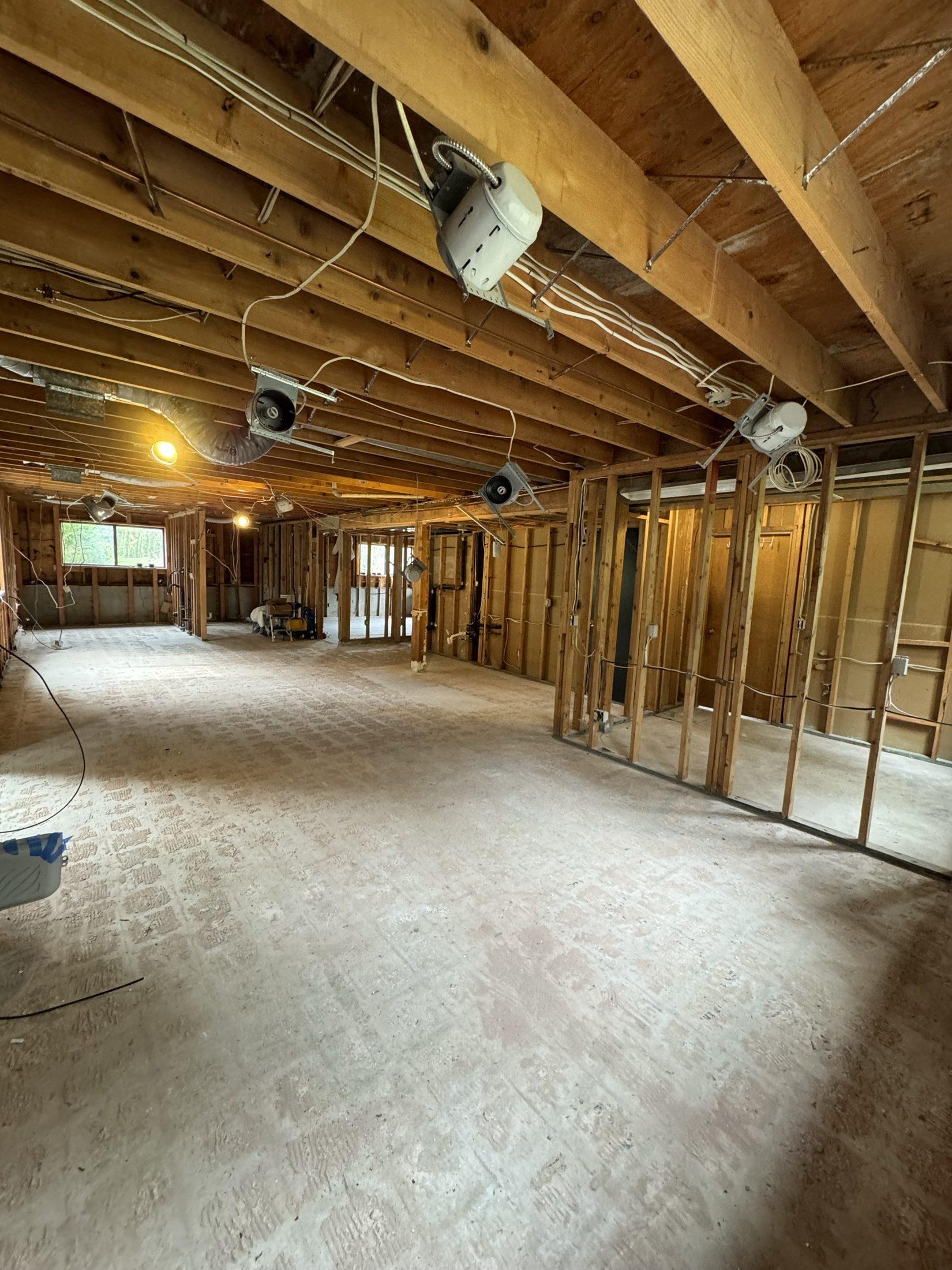
Photos from BRD Demolition jobs across King and Snohomish counties.
Get in touch / 07
Ready to discuss
your demolition project?
Thinking about demoing part of your home, or have a question about a project? Give BRD a call and we can help you get it done the right way.
Contact us today