
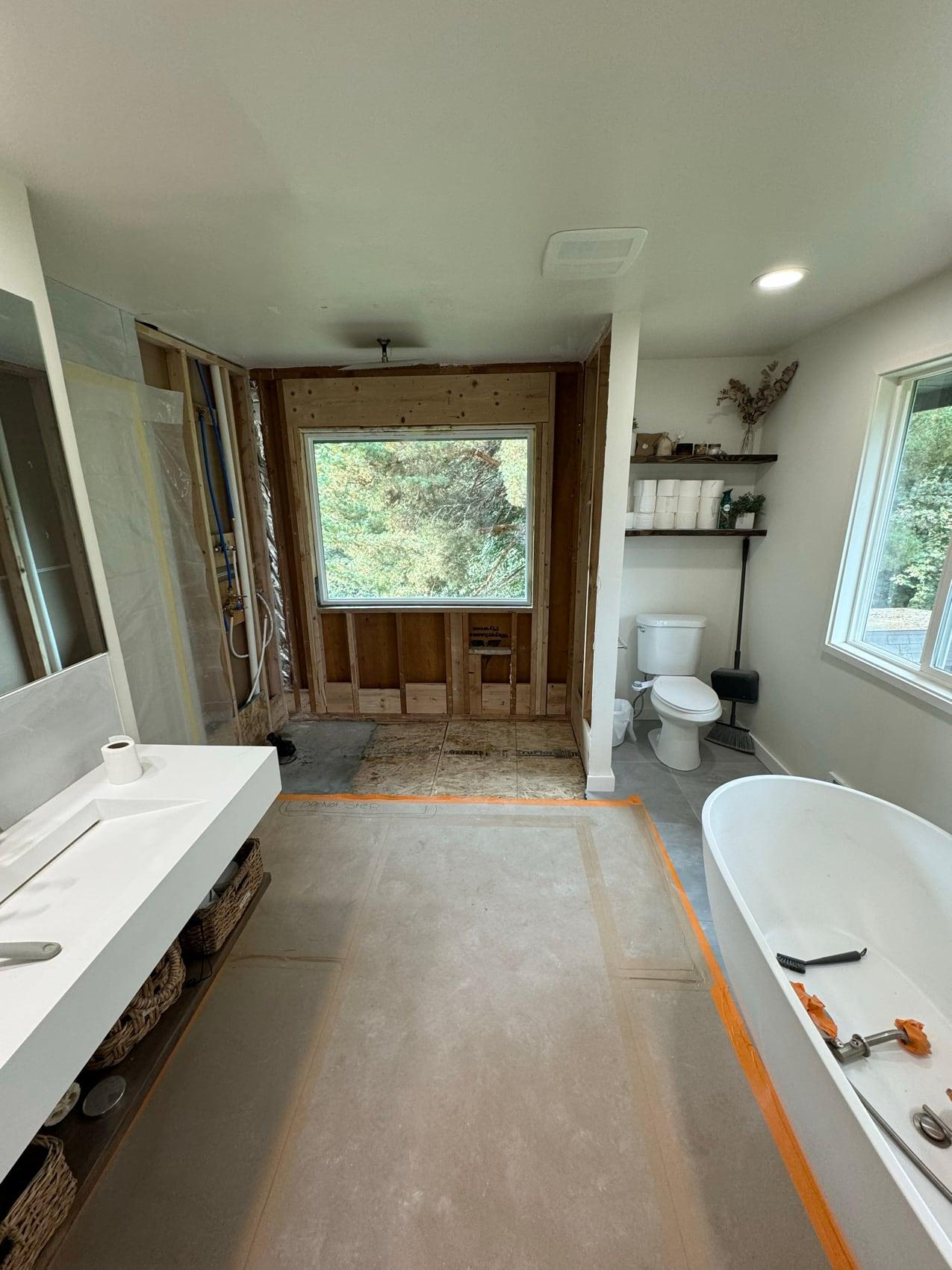
Bathroom demolition / Greater Seattle
Bathroom demolition in Greater Seattle
From vanities to bathtubs, showers, tile, and flooring, we remove it all down to clean studs and subfloor so your bathroom is ready for your remodel.
Residential / Commercial / Site protection
Get a free estimateThe short answer
What does bathroom demolition include?
Bathroom demolition is the removal of the tub or shower, wall and floor tile, vanity, toilet, and wall finishes so the room can be rebuilt. BRD Demolition performs bathroom demolition for homeowners and contractors across Greater Seattle, shutting off water before work begins, containing dust, and hauling all debris away. Most bathrooms are completed in a few hours to a couple of days.
- Commonly removed
- Tub, shower pan, tile, backer board, vanity, toilet, flooring, drywall
- Typical duration
- A few hours to a couple of days
- Left for other trades
- Plumbing and electrical changes, waterproofing, new installation
- Debris
- Loaded and hauled off site by BRD Demolition
- Service area
- Greater Seattle, including King and Snohomish counties
- Estimate
- Free, written after an on-site walkthrough
Before we start / 01
What wedo beforethe firsttile comesoff.
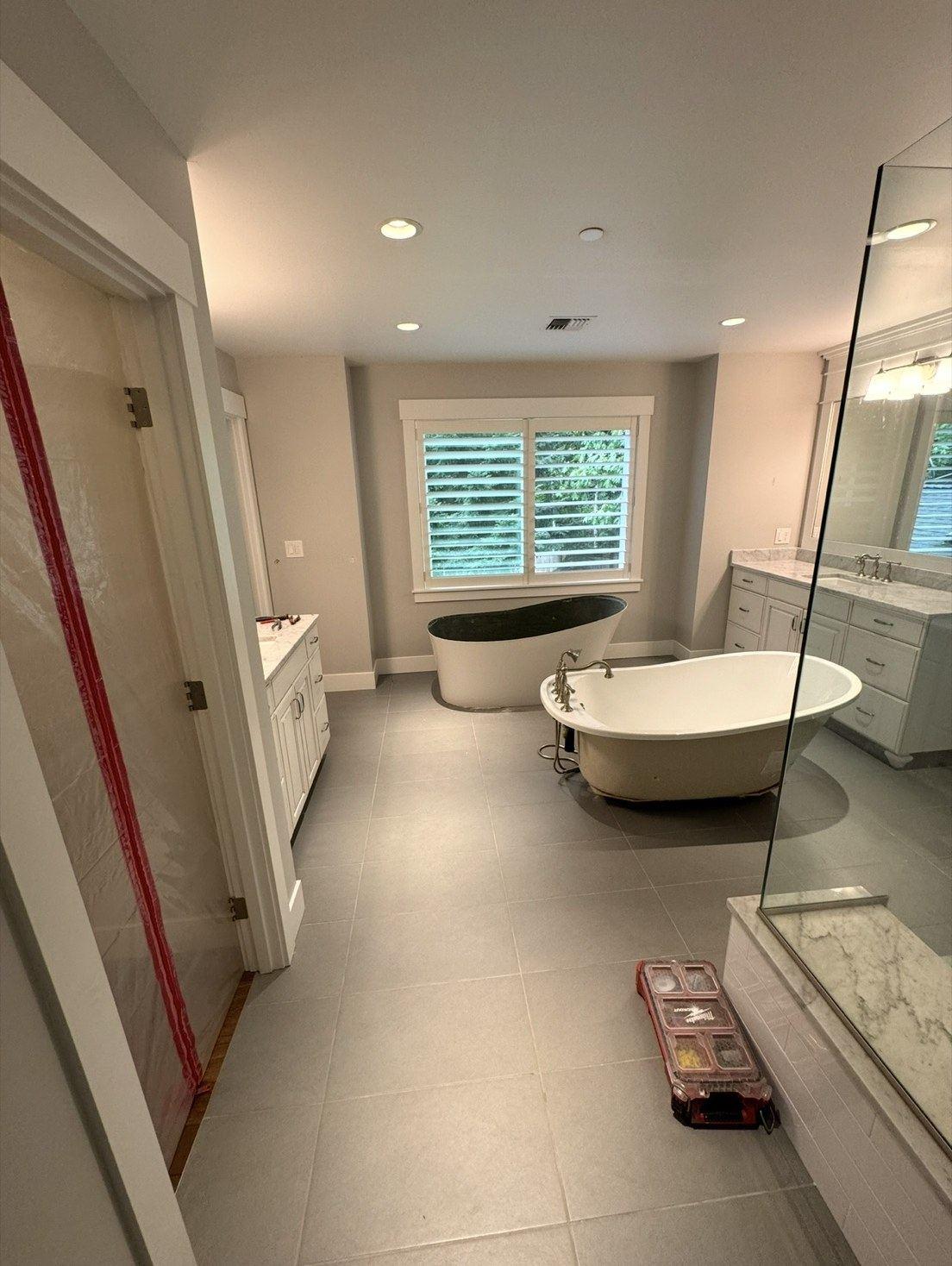
Bathrooms are small, wet, and usually in the middle of the house. Before we touch any fixture, we shut off the water. Then we seal the doorway and cover the hallway floor so we can carry out cast iron and tile without leaving a trail through your home.
See what is includedWater off / Seal the door / Remove
If this sounds familiar
Signs itis time.
Your bathroom will usually tell you when its finishes have failed.
In our climate, the wall behind the shower valve and the subfloor around the toilet flange are the first places to go soft. If your tile sounds hollow when you tap it, or the grout keeps cracking in the same spot, there is usually moisture in the material behind it.
- Loose, cracked, or hollow-sounding tile in the shower surround.
- A soft or spongy floor near the tub or toilet.
- Staining on the ceiling of the room below.
- A musty smell that cleaning does not fix.
- A tub-to-shower conversion or accessibility remodel is planned.
What is included / 02
What’sincluded.
We do everything from a single shower surround to a full gut.
Tub and shower removal.
We cut fiberglass units out in sections. Cast iron tubs are broken down or carried out whole, depending on your access. Shower pans and mortar beds come out down to the subfloor.
Tile and backer.
We take wall tile off together with the backer board or mortar bed behind it. We do not chip it off the face. That leaves clean studs for your new backer and waterproofing.
Vanity, toilet, and fixtures.
We disconnect vanities, tops, mirrors, toilets, and accessories at the stops and remove them. The supply lines get capped at the valve.
Flooring and subfloor.
We remove the floor tile, vinyl, and underlayment. If the subfloor is water damaged, we can cut it out to the joists so your framer or plumber can see what they are working with.
Plumbing, electrical work, waterproofing, and new installations are handled by the appropriate renovation trades.
How we work / 03
What youcan expect.
Every bathroom we work on starts with a different set of needs.
A powder room refresh might only need the vanity and flooring taken out. A primary bath remodel usually goes down to the studs on the wet walls. We scope the job to your renovation plan and to what your contractor needs exposed.
Our team stays ready for water problems throughout the job. If we open a wall and find rot, an active leak, or mold, we stop, show you, and let you decide the next step with your contractor before we go any further.
Our process
How itworks.
Here is how we take a bathroom apart without damaging the rest of your home.
Shut off and protect.
We shut off the water, drain the fixtures, seal the doorway, and cover the path out.
Fixtures out.
The toilet, vanity, mirror, and accessories come out first to give us room to work.
Surround and tub.
The tile and backer come off the walls. Then we free the tub or shower pan and remove it.
Floor.
We lift the floor tile and underlayment and cut out any damaged subfloor we agreed on.
Clean out.
We de-nail the framing, haul the debris away, sweep the room, and walk it with you.
Your options
Repairor tearit out?
Tile problems are usually problems with what is behind the tile. Here is how to tell.
A few cracked tiles on a sound wall can be repaired. Tile that sounds hollow, moves underfoot, or keeps cracking along the same line is telling you the backer or subfloor has failed, and new tile over it will fail the same way.
The same applies to tub and shower conversions. Fitting a new pan against old backer board leaves a seam at exactly the point where water collects. Taking the wet walls to the studs lets your installer waterproof the whole enclosure as one system.
- Hollow or loose tile in the surround: remove to studs
- Soft floor at the toilet or tub: open the subfloor and check the joists
- Surface-only refresh on a sound wall: selective removal is fine
- Converting tub to shower: plan on removing surround and subfloor at the drain
Behind the tile / 01
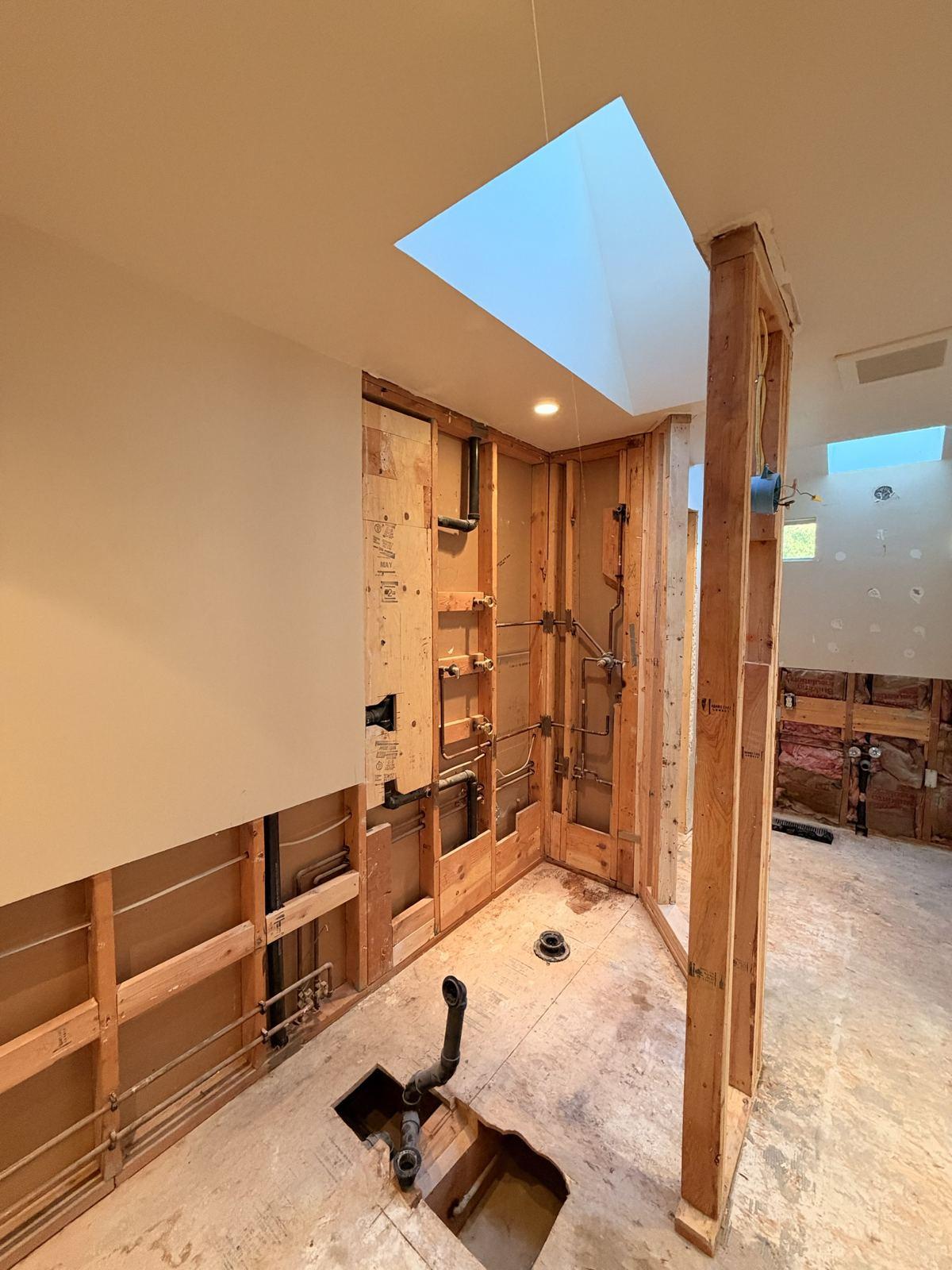
See whatyour wallswerehiding.
Opening the wet walls to the studs is the only way to know the condition of the framing, valve, and drain. It also gives your plumber and tile setter a flat, clean surface to build a properly waterproofed shower on.
Occupied homes / 02
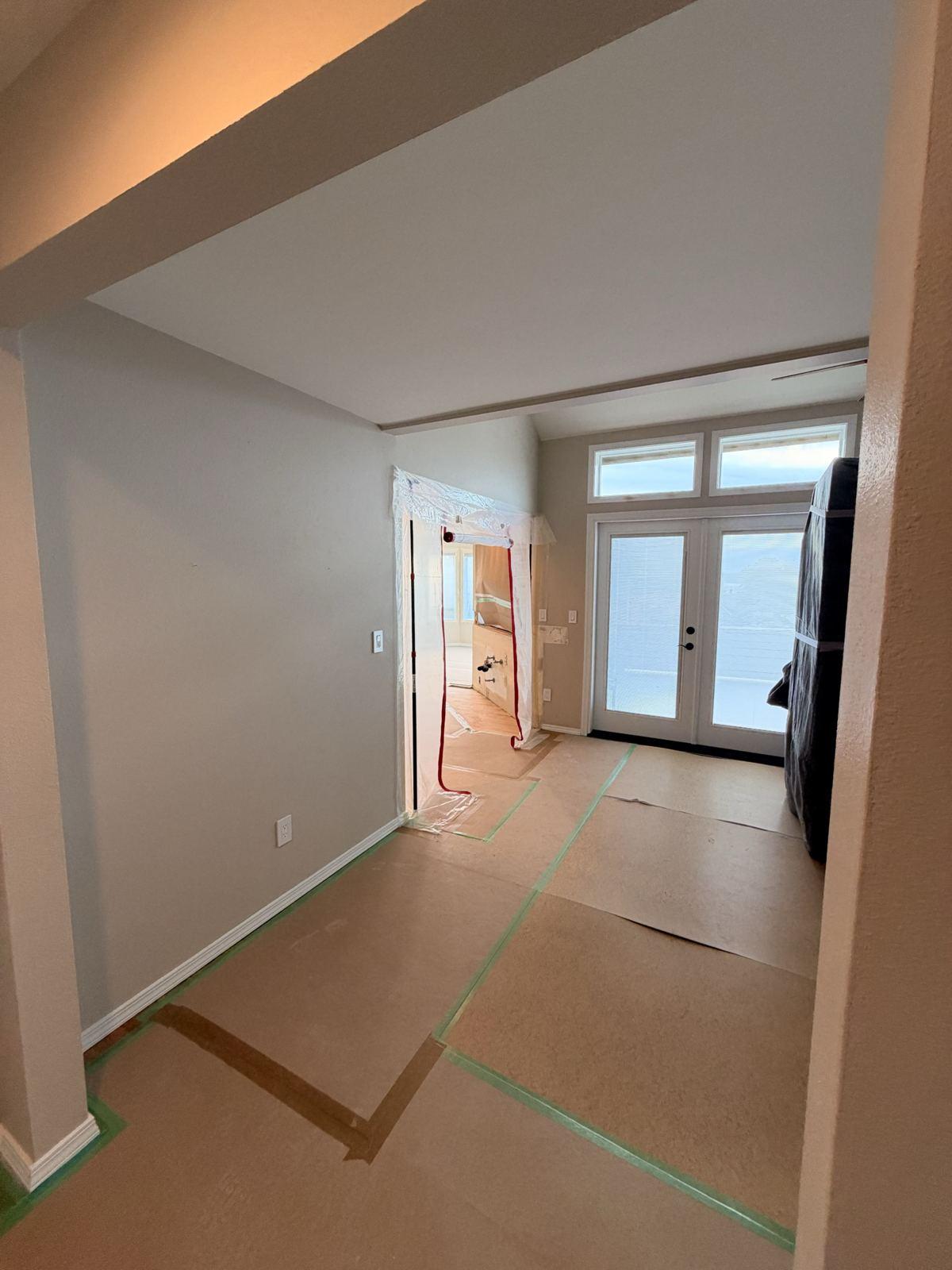
Keepingthe restof yourhomeworking.
Most of our bathroom jobs happen while the family is still living in the house. We seal the doorway and protect the hall to keep the mess inside one room, and we cap the lines so your water can go back on for the rest of the home.
In King and Snohomish counties
Bathroomdemolitionin GreaterSeattle.
Around here, moisture is the main reason bathrooms get torn out.
Many older Seattle-area bathrooms have tile set in a thick mortar bed over wire lath, which is far heavier and slower to remove than tile on backer board. Cast iron tubs are also common in homes built before 1970, and they need a plan to get out of the house.
A home with a crawlspace can hide a long-running leak under the tub for years. We look at the subfloor from above once the tub is out, and it is worth having someone check from below before your new floor goes down.
Why it matters
Whatwaitingcosts you.
Water damage in a bathroom does not stay the same size.
A failed shower surround lets water into the wall cavity every time someone uses it. Over months, that goes from stained backer board to rotted studs and subfloor, and eventually to the ceiling below. The demolition job grows right along with it.
Tiling over a damaged base hides the problem and usually fails again within a few years. Removing the finishes down to sound material is what lets your rebuild last.
Pricing guidance
What bathroomdemolitioncosts.
Every job is quoted after a walkthrough, and the estimate is free.
We quote every bathroom individually after seeing it in person. Here is what affects your price:
- Bathroom size and how many walls go to studs
- Tub type: cast iron and mortar-set tubs take longer than fiberglass
- Tile set in a mortar bed versus on backer board
- Whether flooring and subfloor are included
- Upstairs location, stairs, and distance to the driveway
- Extent of any water damage found
What customers say
5.0 on Google
from 62 reviews.
Rating and review count as shown on BRD Demolition’s Google Business Profile, November 2026.
Read every review on Google“They kept the job site and the rest of our house super clean.”
Brenn G.Bathroom remodel / Google review
“They did a chimney demolition for me and made it look easy.”
Reuben C.Chimney demolition / Google review
“With BRD Demo, I know the project will go smoothly”
Joshua F.General contractor / Google review
Frequently asked questions
Questionsand answers.
How long does bathroom demolition take?
BRD Demolition completes most bathroom demolition jobs in the Greater Seattle area in a few hours to a couple of days. Mortar-set tile, cast iron tubs, and subfloor removal add time.
Can you remove just the tub or shower?
Yes. A tub or shower can be removed on its own for a conversion. The surrounding tile and backer usually need to come out with it at least to the edge of the new unit, and we protect the rest of the room.
Do you turn the water off?
Yes. Water is shut off before fixtures are disconnected and supply lines are capped at the stops. If the stops are seized or missing, the main is shut off and a plumber may be needed to cap the lines so water can be restored to the rest of the house.
What if you find mold or rot?
We stop and show you. Small areas of water-damaged drywall and subfloor are normally removed as part of the demolition. Larger mold growth or structural rot should be assessed by your contractor or a remediation specialist before work continues.
Do I need an asbestos survey before demolition starts?
In King and Snohomish counties, the Puget Sound Clean Air Agency requires an asbestos survey before renovation or demolition work begins. Materials such as popcorn ceiling texture, sheet vinyl, and old joint compound are common suspects in older Seattle-area homes. BRD Demolition does not perform asbestos abatement. If the survey finds asbestos in the work area, a certified abatement contractor removes it first and BRD Demolition handles the remaining demolition.
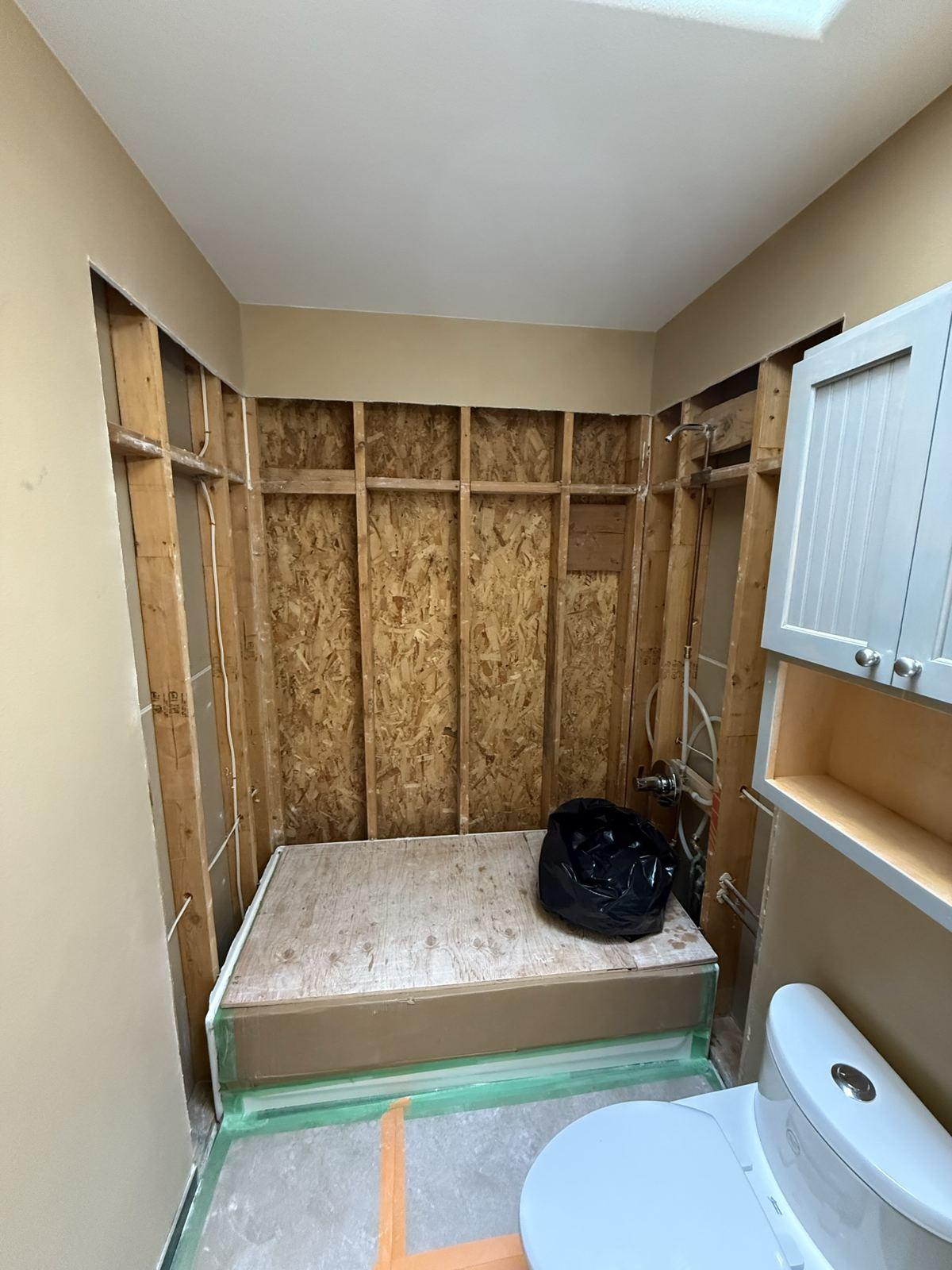
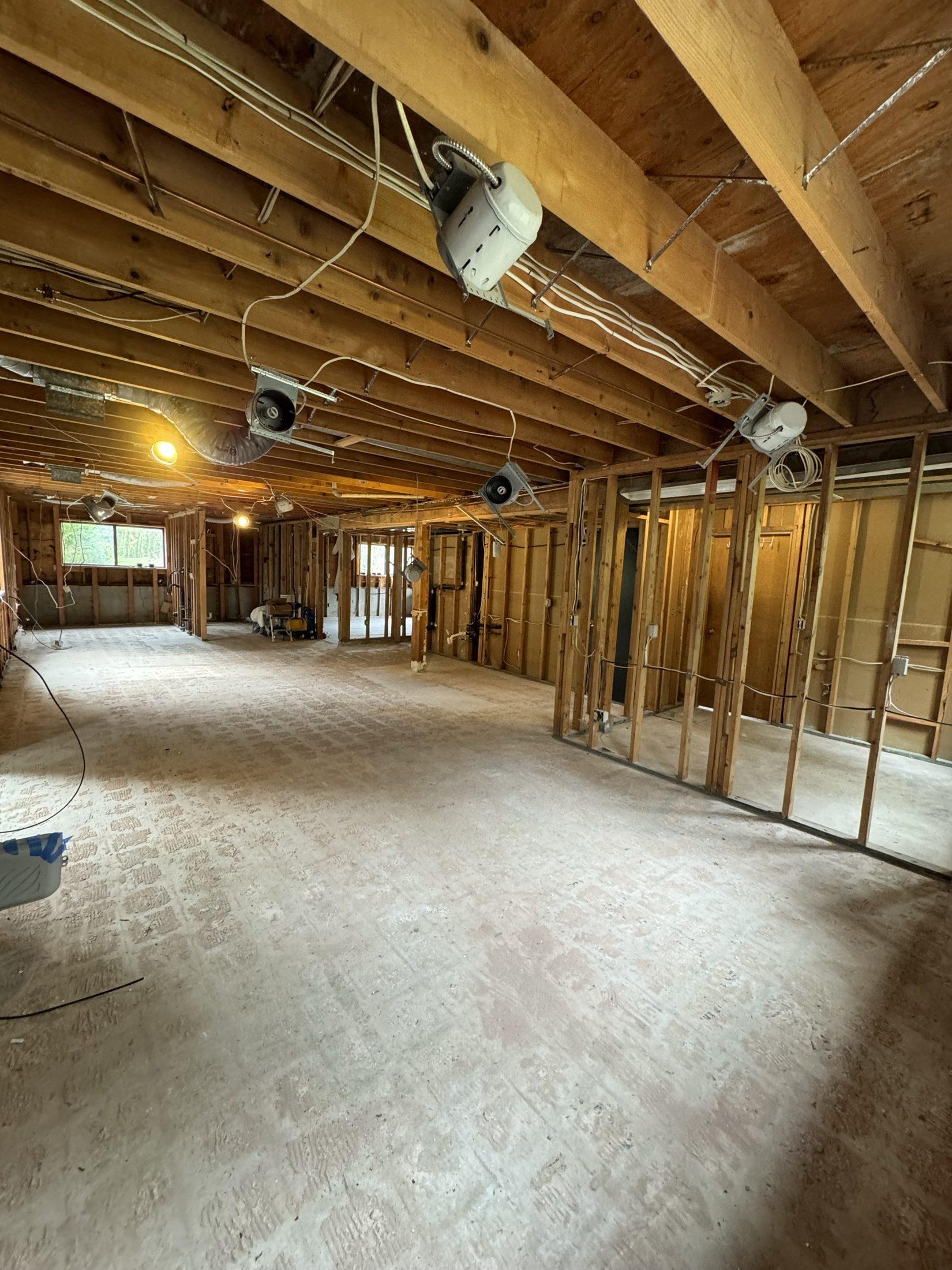
Job photos
Bathroom demolitionon site.
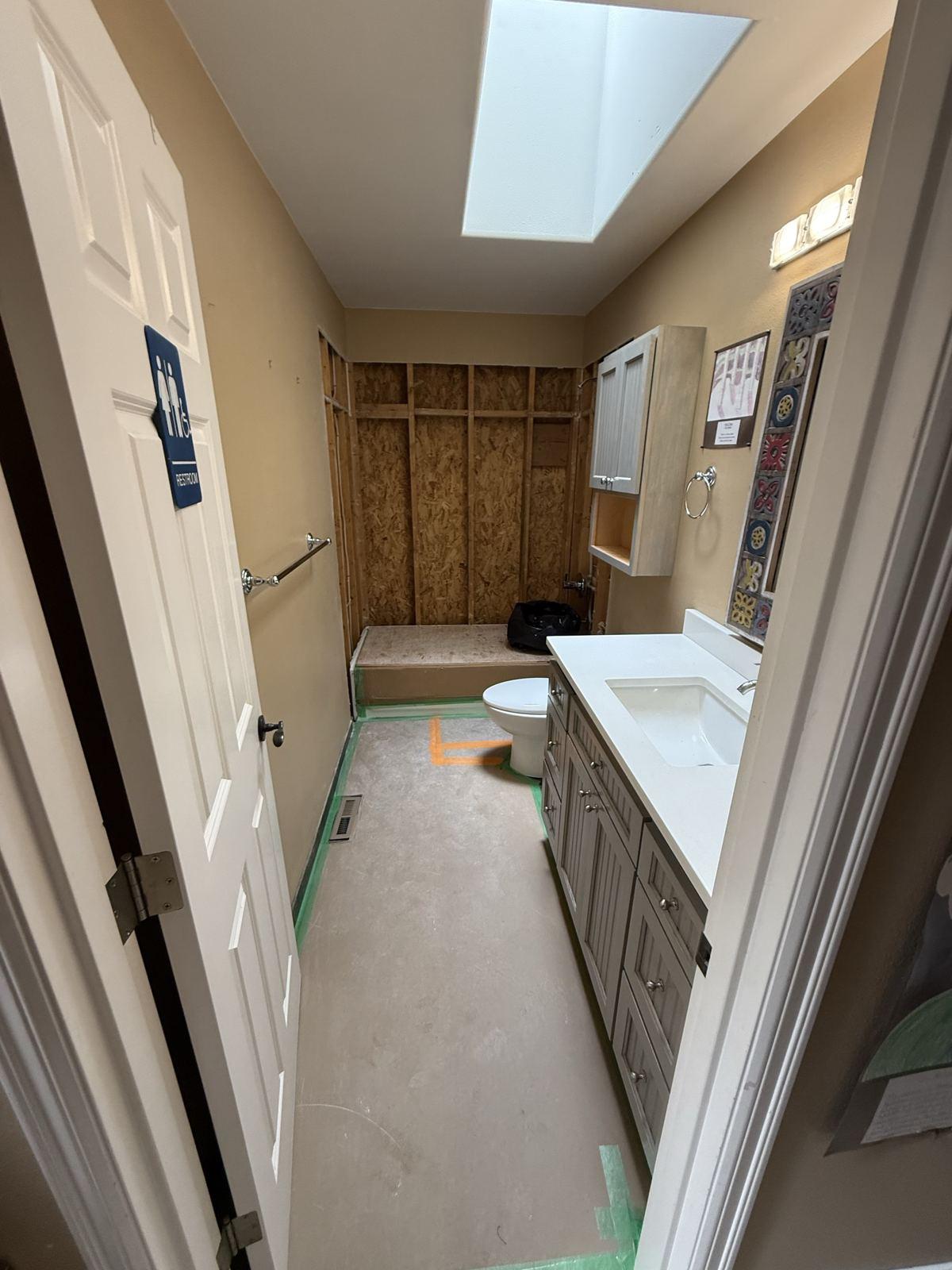
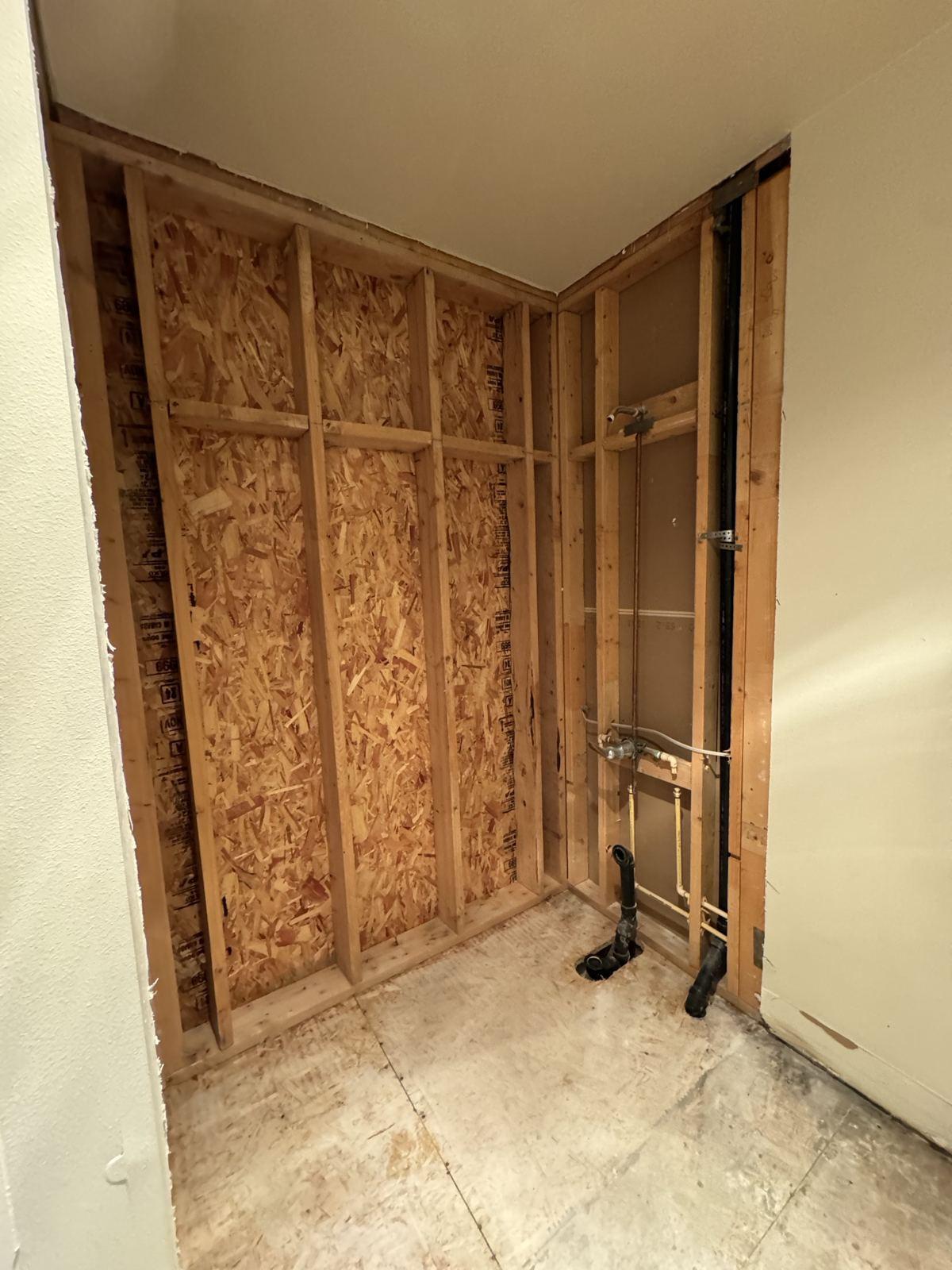
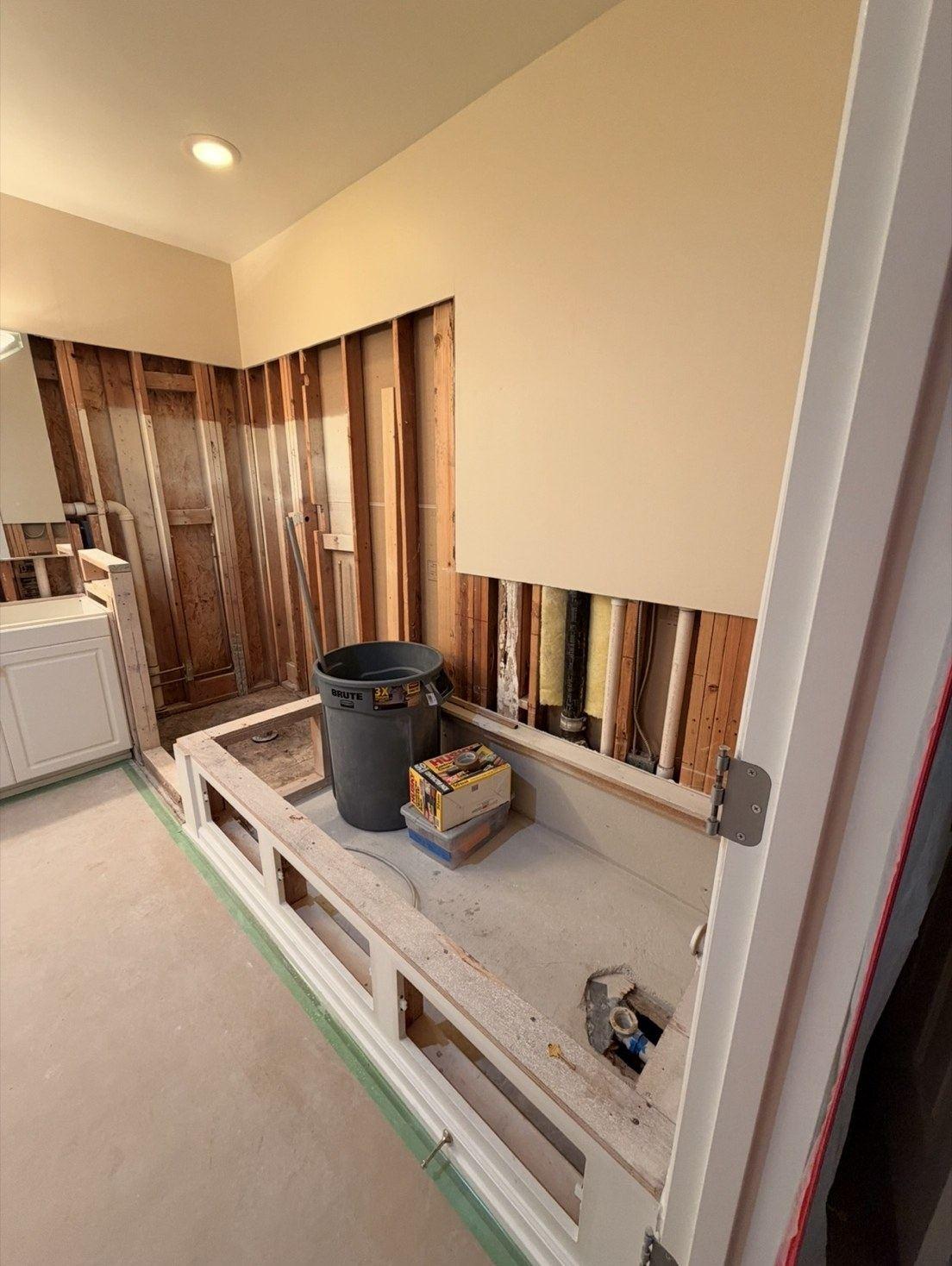
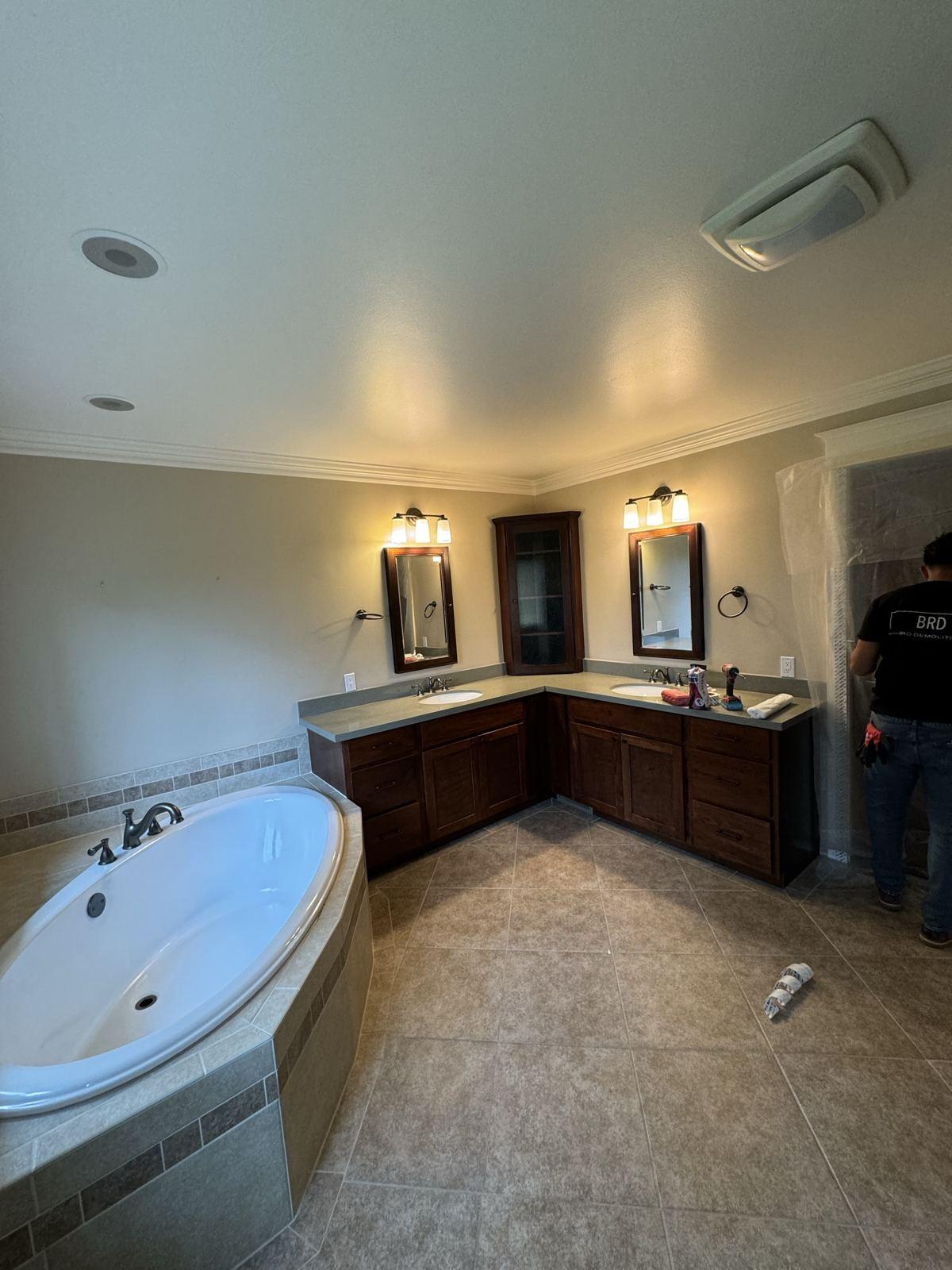
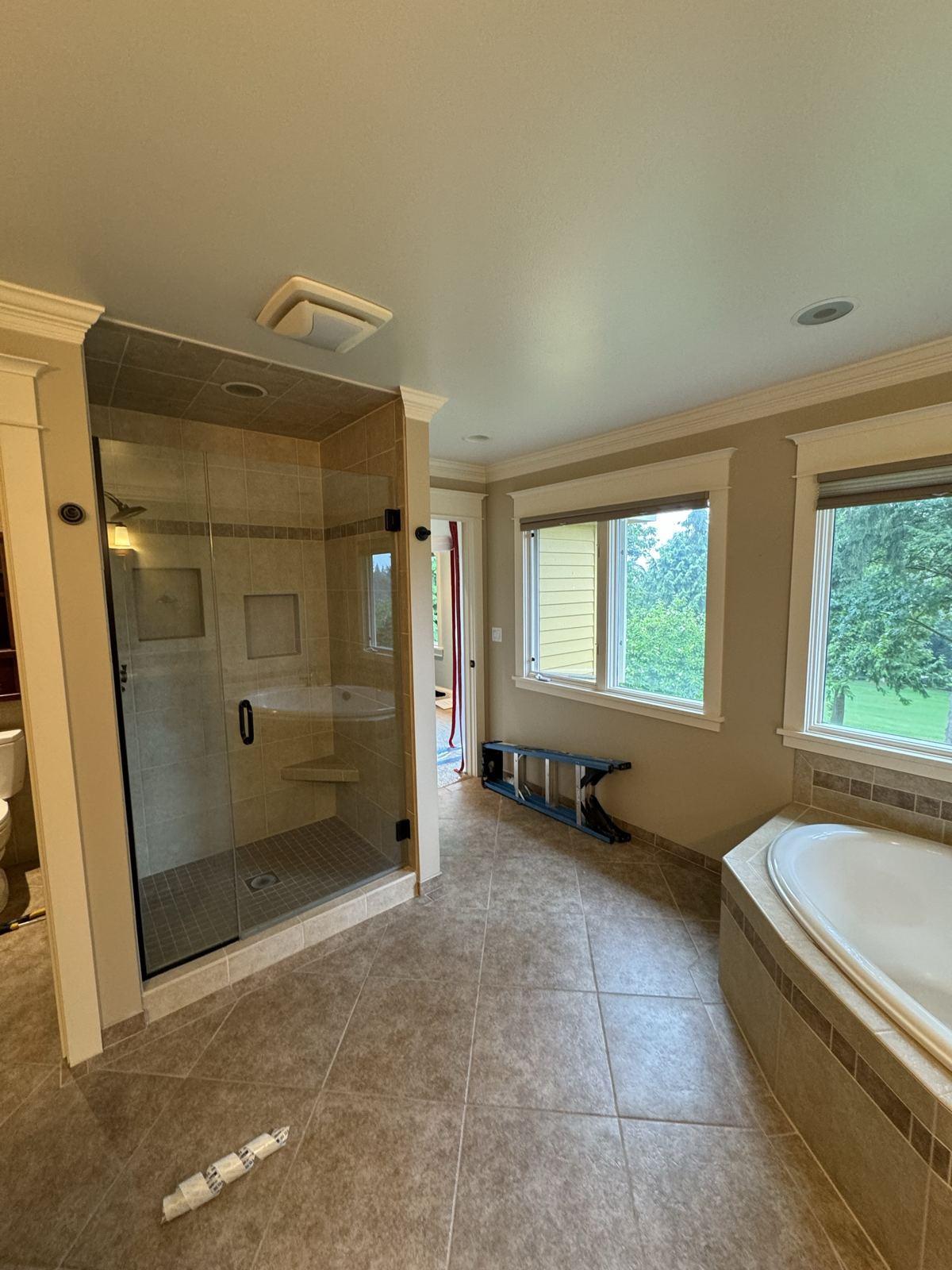
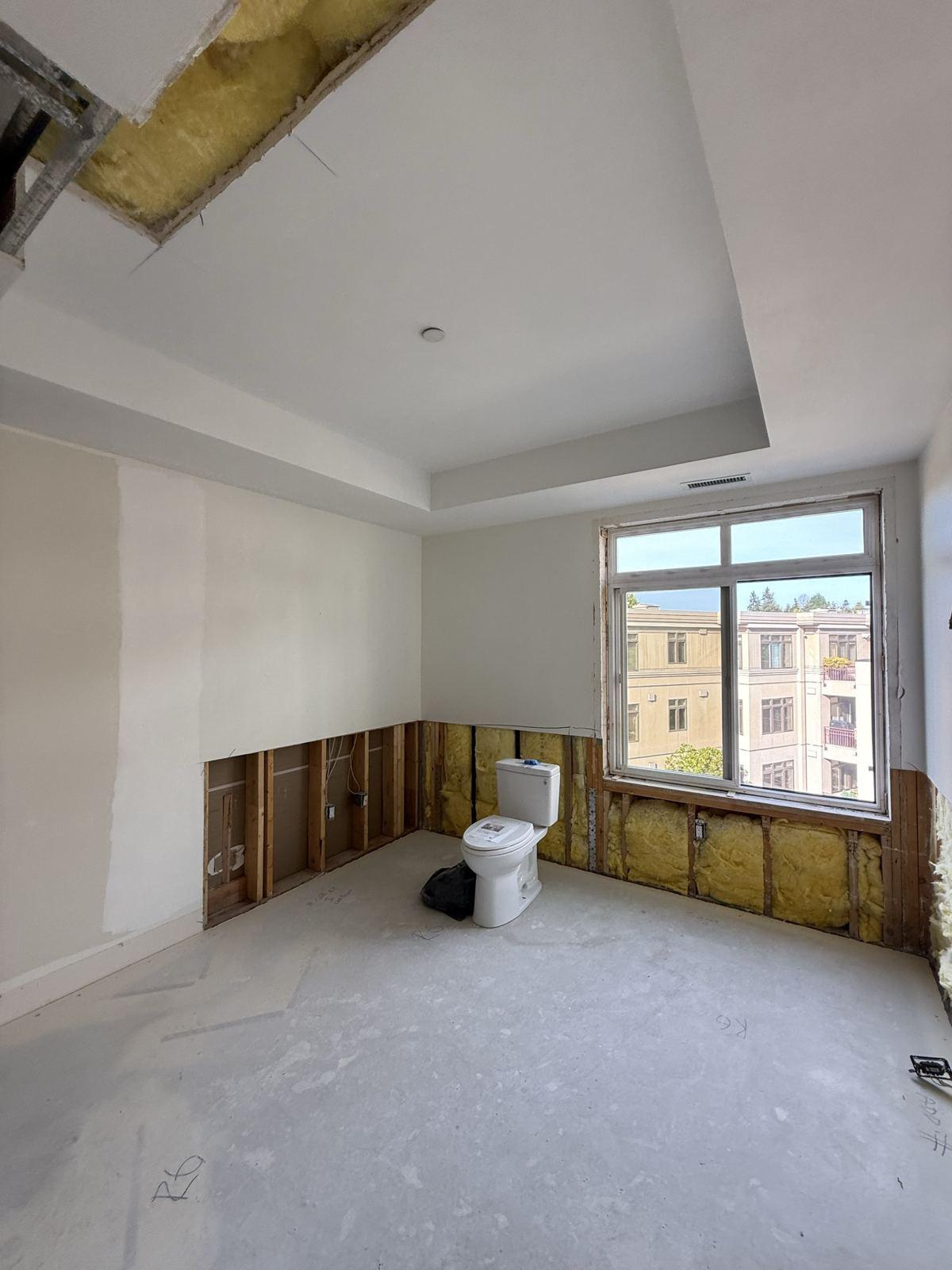
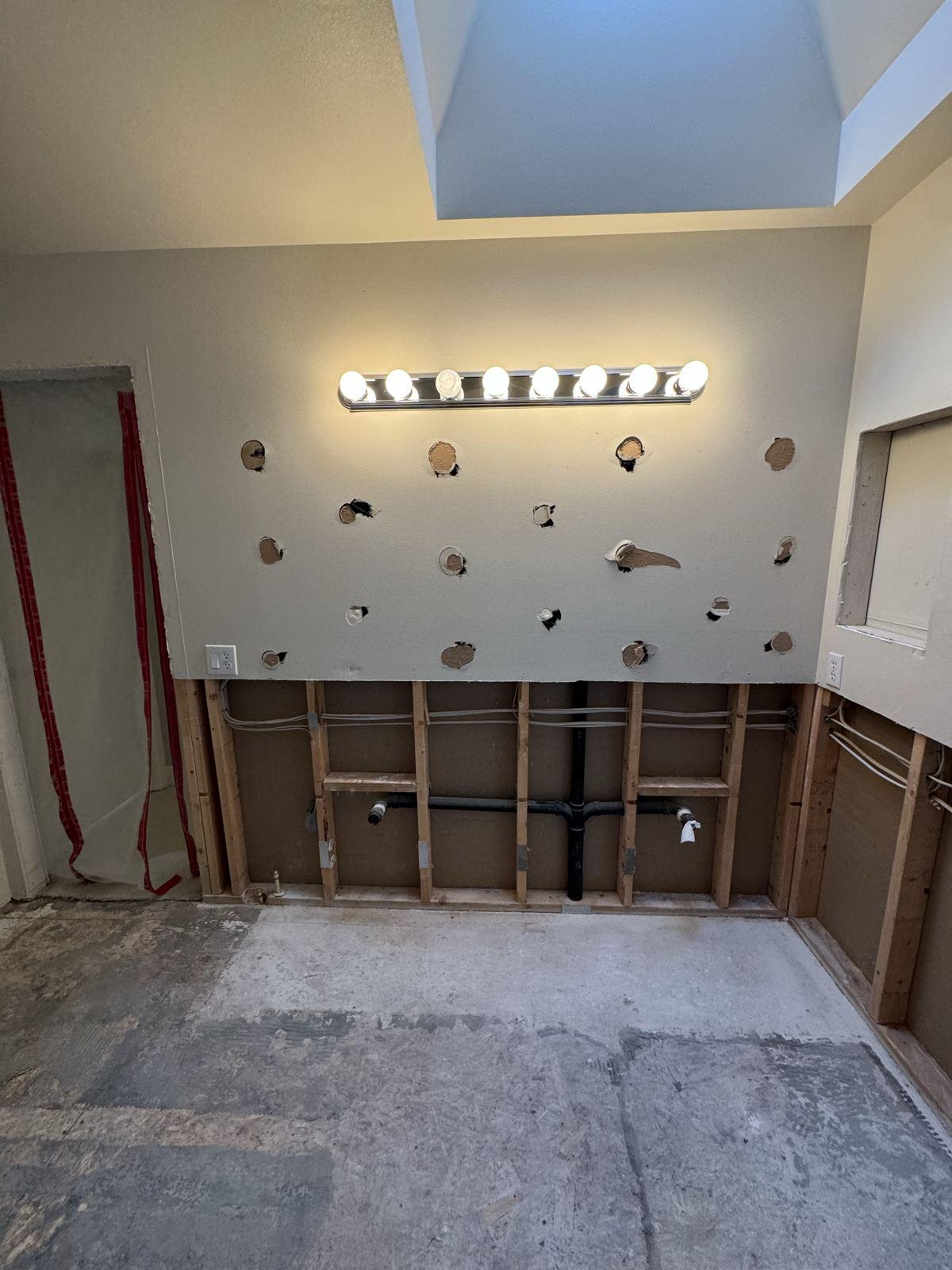
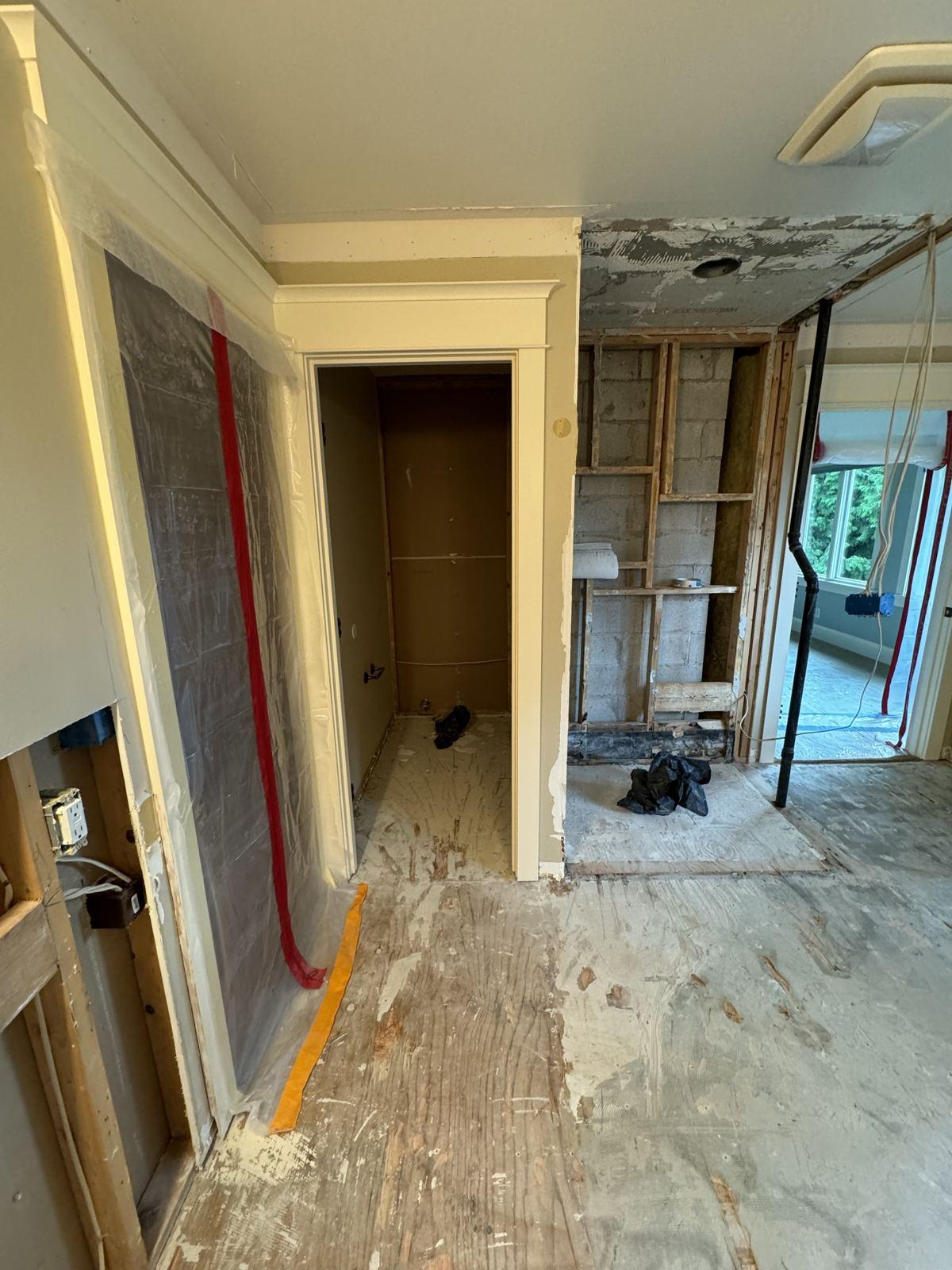
Photos from BRD Demolition jobs across King and Snohomish counties.
Get in touch / 07
Ready to discuss
your demolition project?
Thinking about demoing part of your home, or have a question about a project? Give BRD a call and we can help you get it done the right way.
Contact us today